
Travertine marble (technically a form of terrestrial limestone) is a natural stone formed by the rapid precipitation of calcium carbonate, often at the mouth of hot springs or in limestone caves. In contemporary architecture, it is prized for its “warm neutrality,” characterized by a unique porous texture and linear veining that distinguishes it from the dense, swirled patterns of traditional metamorphic marble.
Technical Profile
-
Geological Origin: Unlike true marble, which is metamorphic, travertine is a sedimentary rock. Its signature small pits and troughs are caused by escaping gas bubbles during its formation.
-
Color Palette: Dominated by earthy, “greige” tones, including sand, honey-caramel, and silver-gray.
-
Surface Finishes: * Filled & Polished: The natural pores are filled with matching resin to create a smooth, high-end surface similar to calcitic marble.
-
Unfilled / Tumbled: The natural pits are left exposed for a rustic, “antique” texture, often used in Mediterranean-inspired designs.
-
Key Performance Attributes
| Feature | Architectural Benefit |
| Thermal Regulation | Stays naturally cool to the touch; highly preferred for outdoor pool decks and patios in hot climates like the UAE or Texas. |
| Workability | Slightly softer than calcitic marble (Mohs 3–4), making it easier to cut into complex precision aspect ratios or fluted wall panels. |
| Weight Density | Its natural porosity contributes to a lower “dead load” compared to solid granite or basalt, especially when engineered into ultralight cladding. |
| Insulation | The honeycomb-like micro-structure provides better acoustic and thermal insulation properties than dense metamorphic stones. |
2026 Design Trends
-
Supersized Slabs: A major shift toward Grand Scale Formats (e.g., $1200 \times 2400 \text{ mm}$), utilizing aluminum honeycomb backings to create monolithic, “seamless” travertine walls in luxury lobbies.
-
Cross-Cut vs. Vein-Cut: * Vein-cut highlights the linear, “wood-grain” layers of sediment.
-
Cross-cut reveals a cloudy, more uniform circular pattern, increasingly used for bespoke banyo accessories like monolithic washbasins.
-
-
Tactile Minimalist Pairing: Travertine is the primary material used to achieve “Emotional Minimalism,” typically paired with raw wood, brass fixtures, and matte-black architectural elements to add warmth to modern spaces.
Strategic Use Cases
-
Exterior Facades: Highly durable for outdoor use; when treated with UV-resistant sealers, it maintains its color depth indefinitely.
-
Luxury Maritime Interiors: Used as an ultra-thin (3 mm) veneer in yachts to provide a “grounded” Earth aesthetic without the structural weight.
-
BIM Integration: In 3D BIM catalogs, travertine assets allow architects to simulate exact light diffusion and shadow-play within the stone’s natural pits, ensuring perfect visual integration in the “digital twin.”
Filter by brand

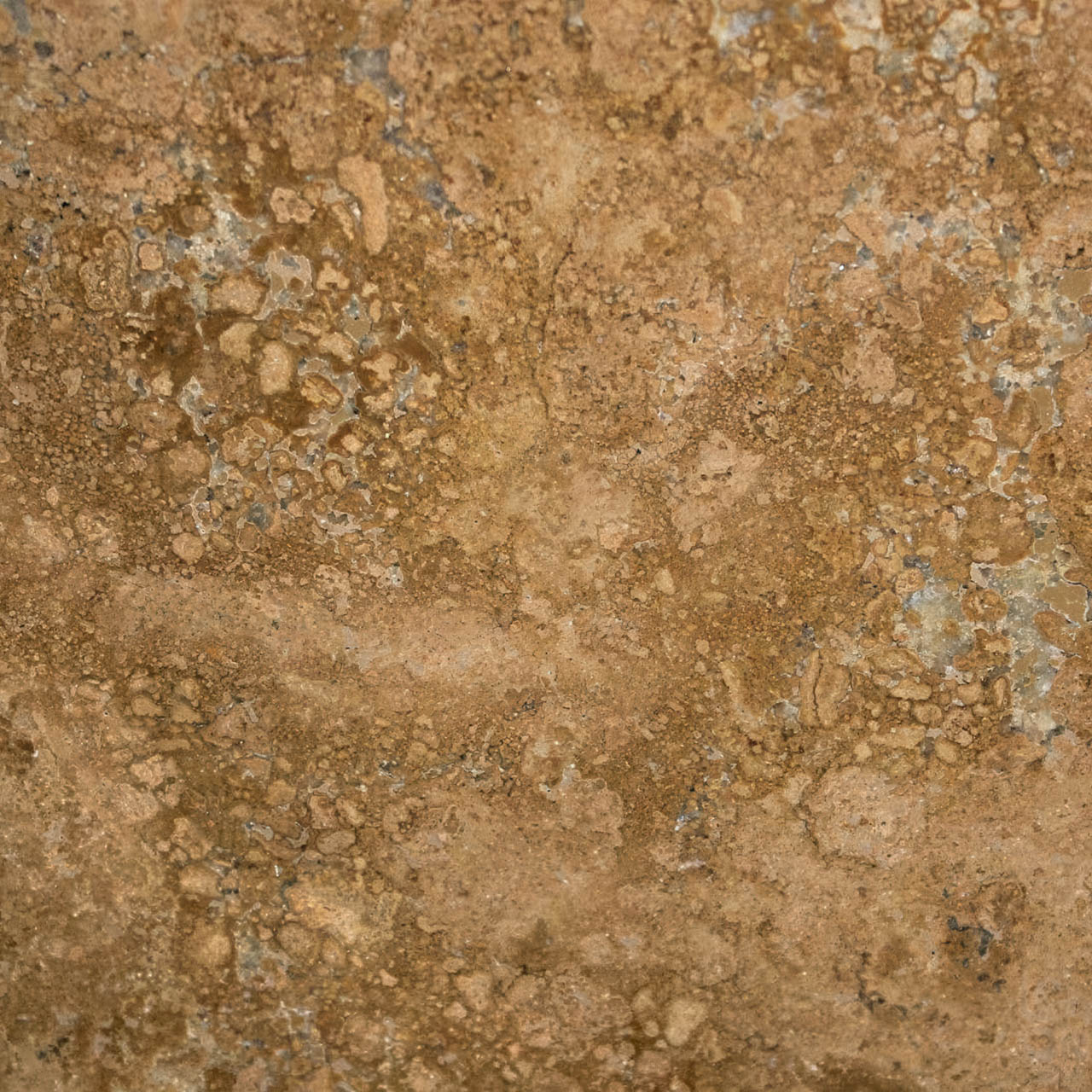
Noche Travertine Marble Block Marble
Noche Travertine Marble: Timeless Depth for Modern Architecture
Noche Travertine is the premier choice for designers seeking to infuse spaces with warmth, character, and a sense of history. Characterized by its deep, earthy chocolate tones and rich coffee hues, this natural stone offers a sophisticated alternative to lighter travertines, providing a bold foundation for both classic and contemporary aesthetics.
Noche Travertine Marble Laminate Marble
Noche Travertine Marble: Timeless Depth for Modern Architecture
Noche Travertine is the premier choice for designers seeking to infuse spaces with warmth, character, and a sense of history. Characterized by its deep, earthy chocolate tones and rich coffee hues, this natural stone offers a sophisticated alternative to lighter travertines, providing a bold foundation for both classic and contemporary aesthetics.
Noche Travertine Marble Mosaic Marble
Noche Travertine Mosaics: Timeless Depth in Intricate Detail
Noche Travertine is the premier choice for designers seeking to infuse spaces with warmth, character, and a profound sense of history. Characterized by its deep, earthy chocolate tones and rich coffee hues, transforming this natural sedimentary stone into precision-cut mosaic tiles provides a bold, highly textural foundation for both classic and contemporary aesthetics. It offers a sophisticated, intricate alternative to lighter travertines, grounding any interior with its dark, organic palette.
Noche Travertine Marble Slab Marble
Noche Travertine Marble: Timeless Depth for Modern Architecture
Noche Travertine is the premier choice for designers seeking to infuse spaces with warmth, character, and a sense of history. Characterized by its deep, earthy chocolate tones and rich coffee hues, this natural stone offers a sophisticated alternative to lighter travertines, providing a bold foundation for both classic and contemporary aesthetics.
Noche Travertine Marble Tile Marble
Noche Travertine Tiles: Timeless Depth for Modern Architecture
Noche Travertine tiles are the premier choice for designers and architects seeking to infuse spaces with warmth, character, and a profound sense of history. Characterized by deep, earthy chocolate tones and rich coffee hues, these natural stone tiles offer a sophisticated, high-contrast alternative to lighter travertines, providing a bold foundation for both classic physical builds and high-fidelity digital architectural models.