Technical Color Analysis Report Calacatta Viola marble
Technical Color Analysis Report Calacatta Viola marble
-
Primary Color Palette
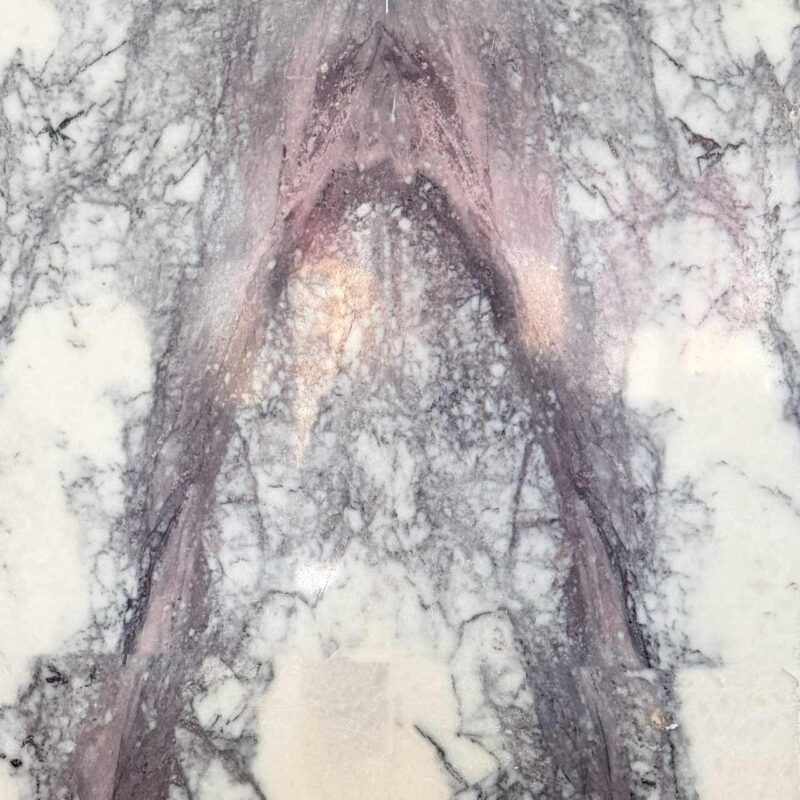
The surface is composed of four distinct tonal groups. The interplay between these colors creates the “Viola” effect, where the dark veins appear to bleed into the lighter substrate.
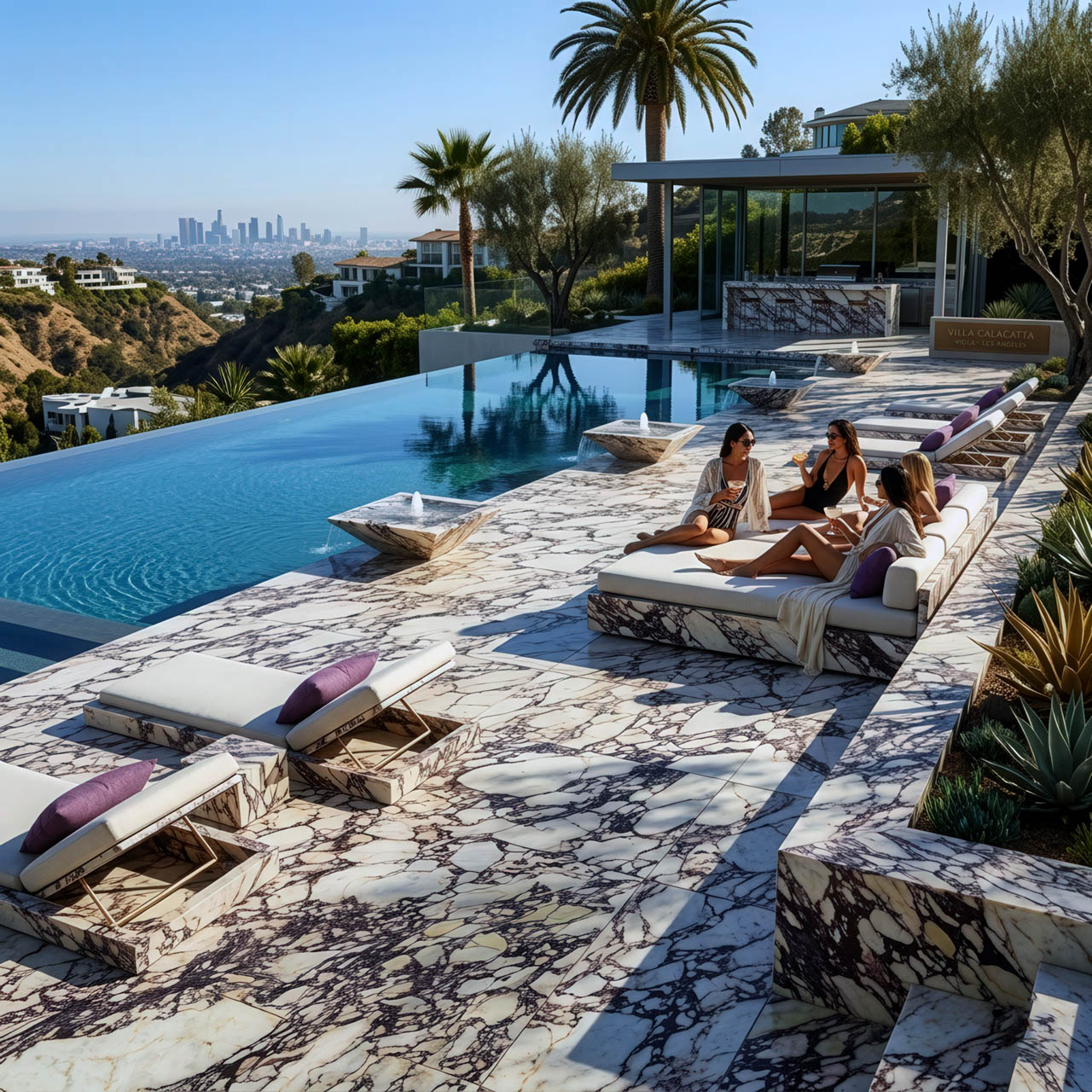
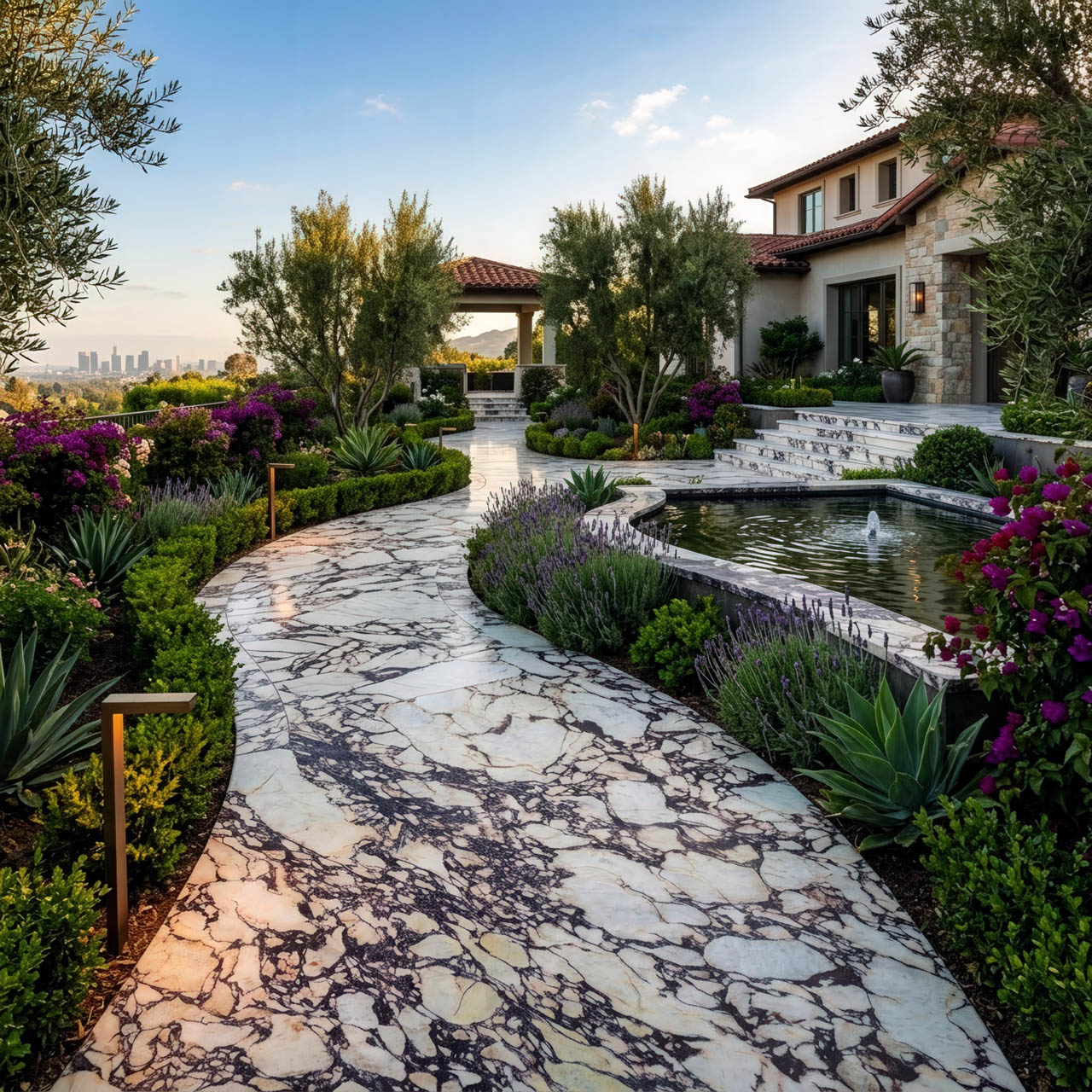
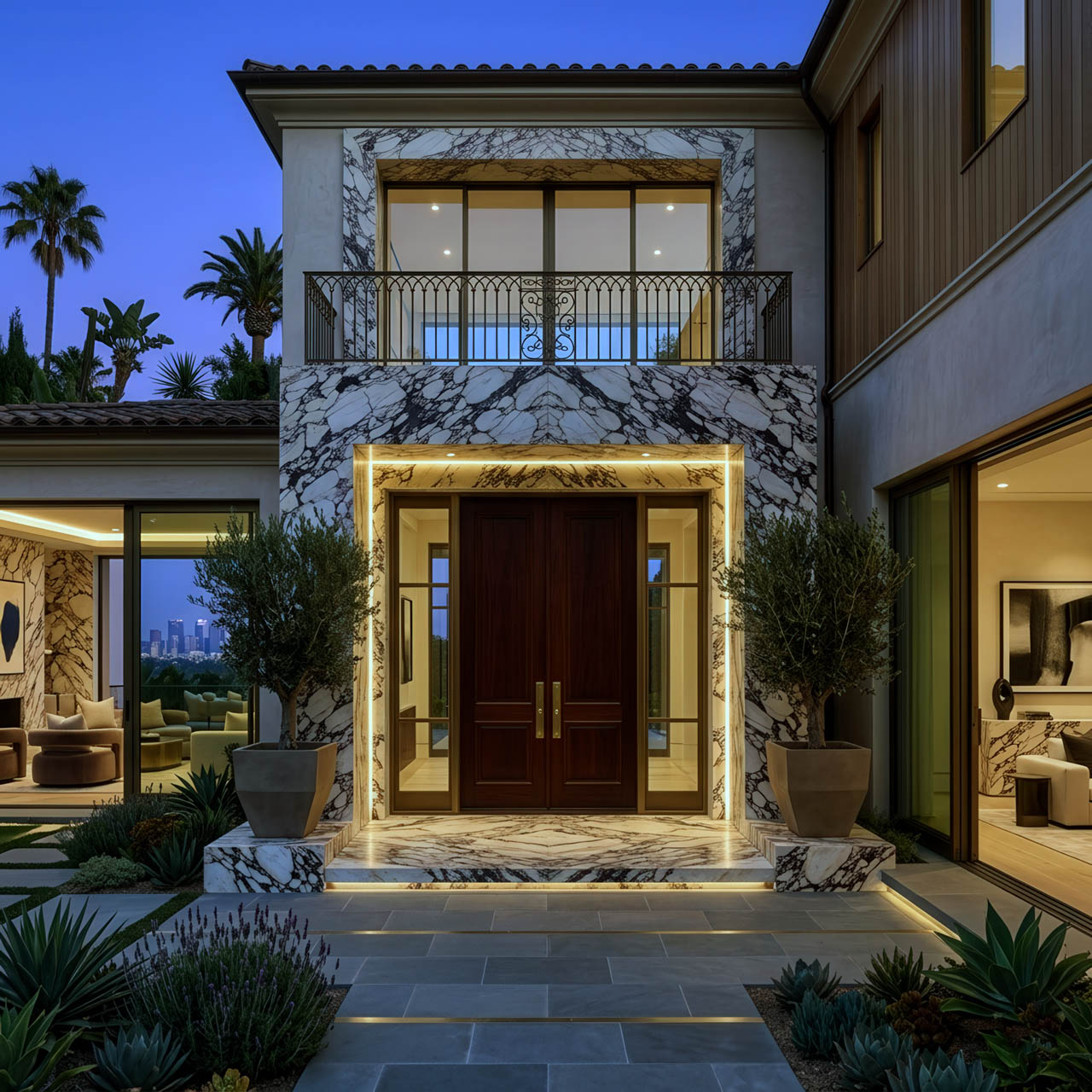
| Component | Visual Description | HEX Code | RGB Equivalent |
| Base Substrate | Off-white to Light Cream | #F4F1E8 | (244, 241, 232) |
| Primary Veining | Deep Burgundy / Black-Purple | #3B2433 | (59, 36, 51) |
| Secondary Veining | Muted Plum / Mauve | #7D6372 | (125, 99, 114) |
| Transition Tones | Pale Amber / Warm Grey | #D1C7B1 | (209, 199, 177) |
-
Estimated Area Distribution (Percentage Ratios)
The visual weight of Calacatta Viola is heavily dependent on the “brecciation” (the degree of fragmentation). In this specific slab:
- 65% – Base Substrate (Creamy White): The dominant background provides the luminosity of the stone. It consists of large, angular clasts typical of high-quality Italian marble.
- 25% – Primary Deep Veining (Burgundy/Purple): These thick, dramatic veins provide the structural “movement” of the pattern. They are the defining characteristic that gives the marble its name.
- 7% – Secondary & Transitional Tones: These are the “smudged” edges where the pigment of the veins has leached into the white base during the metamorphic process.
- 3% – Trace Inclusions: Small clusters of warm amber or ochre minerals that provide depth and an organic feel to the cold stone.
-
Morphological Evaluation
- Pattern Type: Brecciated. The stone appears as if it was broken into fragments and fused back together by a dark mineral matrix.
- Saturation: High contrast. The delta between the light base and dark veins creates a sharp visual hierarchy.
- Undertone: Cool-leaning purple veins paired with a warm-leaning cream base. This “temperature clash” is why this marble is a favorite in luxury interior design, as it pairs well with both gold and silver hardware.
Note on Variation: As a natural product, the ratio of color can shift significantly from block to block. Slabs with higher “purple-to-white” ratios are generally considered more “busy” and are often used for focal points like kitchen islands or feature walls.
If Calacatta Viola were a person, it would be the best-dressed guest at the party—sophisticated, impossible to ignore, and deeply rooted in Italian heritage. Quarried in the Carrara region of Italy, this “Breccia” marble is defined by a crisp white background shivered by thick, dramatic veins of deep burgundy, plum, and aubergine.
In 2026, Calacatta Viola has transitioned from a niche “designer’s secret” to the undisputed leader of the “Maximalist Marble” movement, replacing the safer, grey-veined Calacattas of the past decade.
1. The “Hero” Kitchen Island
The most prominent application for Calacatta Viola in 2026 is the Monolithic Kitchen Island. Designers are no longer using this stone as just a surface, but as a structural sculpture.
-
The Waterfall Edge: Slabs are meticulously mitered so that the deep purple veins flow continuously from the countertop down to the floor.
-
Drama on Ice: Oliver Webb, a leading figure in stone design, famously describes its look as “ice sheets floating on a deep red sea.” To let the stone “speak,” it is increasingly paired with minimalist, handleless cabinetry in dark tones like charcoal, navy, or deep plum.
2. Full-Height “Living Art” Backsplashes
In high-end residential projects, Calacatta Viola is frequently used for full-height wall cladding behind ranges or sinks.
-
Bookmatching: Because its veins are so bold and directional, it is the ideal candidate for bookmatching. Two mirrored slabs create a symmetrical, Rorschach-like pattern that serves as the primary “artwork” of the room.
-
Seamless Continuity: By using the same slab for both the countertop and the entire backsplash up to the ceiling, architects create a sense of vertical height and luxury that standard tile cannot achieve.
3. Sculptural Bathroom Vanities and “Powder Room Drama”
Calacatta Viola is the “power move” for small spaces. In powder rooms, where designers want to make a fierce architectural statement, this stone is used for:
-
Block Vanities: Carving a sink and countertop from a single massive piece of Viola marble creates a sense of “Old World” permanence.
-
Integrated Sinks: The stone’s low water absorption (0.20%) makes it technically sound for high-moisture zones, while its rich color hides the water spots that often plague lighter, more porous stones.
4. Fireplace Surrounds and “Floating” Hearthstones
The heat resistance of this dolomitic marble allows it to be used in modern fireplace architecture.
-
Linear Fireboxes: A popular 2026 trend is the floor-to-ceiling fireplace mantle clad in Calacatta Viola. The flickering orange light of a fire emphasizes the deep red and purple hues of the stone, creating an atmospheric, cozy glow.
-
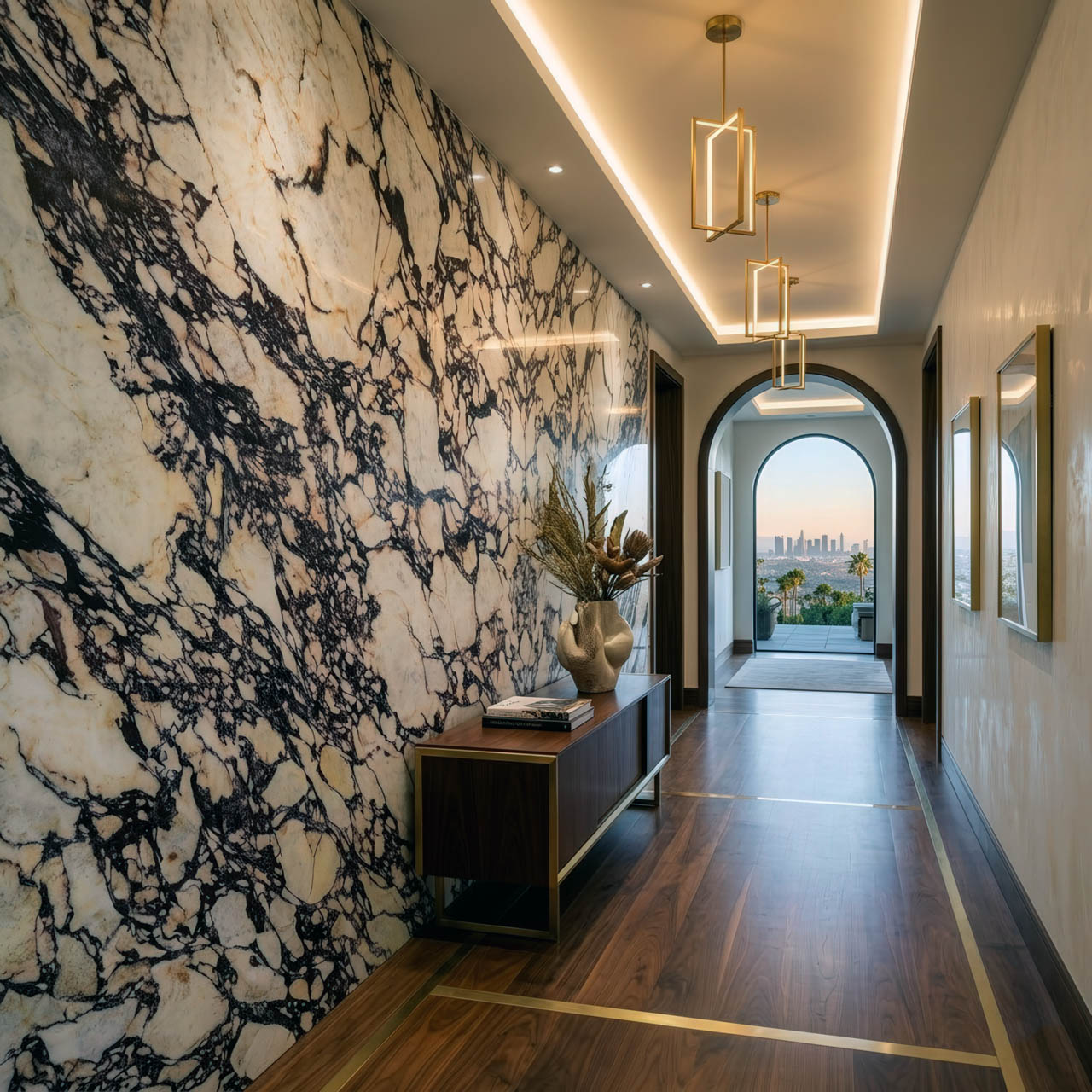
Portals: Beyond fireplaces, architects use Calacatta Viola to “frame” doorways or elevator banks, signaling a transition into a prestigious space.
Technical Specification Table
| Property | Value (Average) |
| Density | 2783 kg/m3 |
| Compressive Strength | 110.0–140.0 MPa |
| Water Absorption | 0.07% – 0.22% |
| Flexural Strength | 18.8 MPa |
2026 Design Pairing Guide: “The Viola Palette”
To maximize the impact of Calacatta Viola, architects recommend the following 2026 styling rules:
-
Metal Pairing: Use Brushed Brass or Aged Gold. The warm yellow of the metal makes the burgundy veins “pop,” whereas chrome or silver can make the stone look cold and clinical.
-
Wood Pairing: Pairs exceptionally well with Dark Walnut or Stained Oak. The heavy grain of dark wood anchors the high-energy movement of the marble.
-
Lighting: Use 3000K to 3500K (Warm White). If the light is too “cool,” the purple veins can shift toward a muddy grey; warm light keeps the “Viola” tones vibrant.
Expert Note for 2026: Calacatta Viola is a brecciated stone, meaning it is naturally fragmented and held together by geological mineral “cement.” When specifying this stone for a 2026 project, ensure your fabricator uses UV-stable epoxy resin to reinforce the veins, ensuring the stone’s structural integrity for decades of high-use activity.