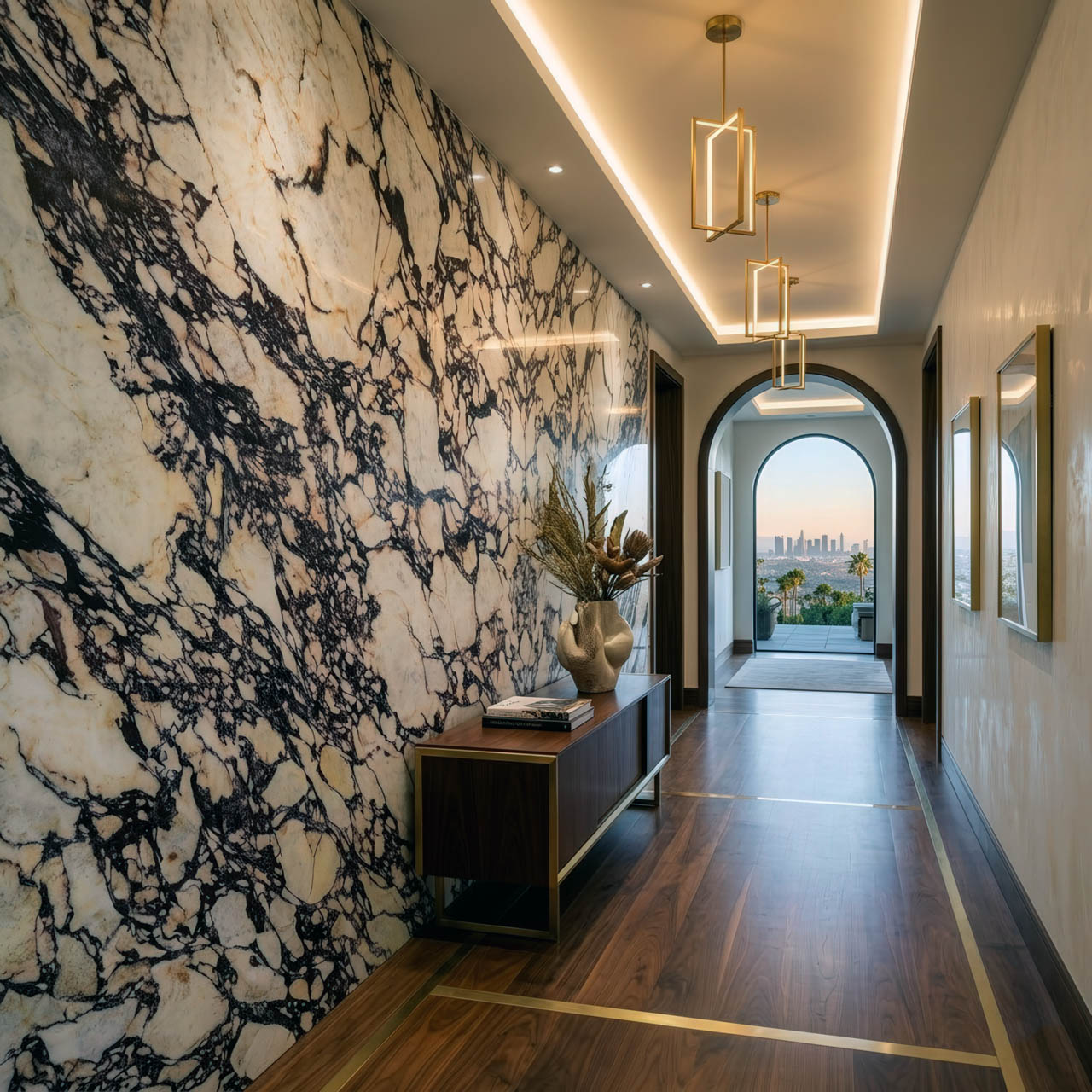
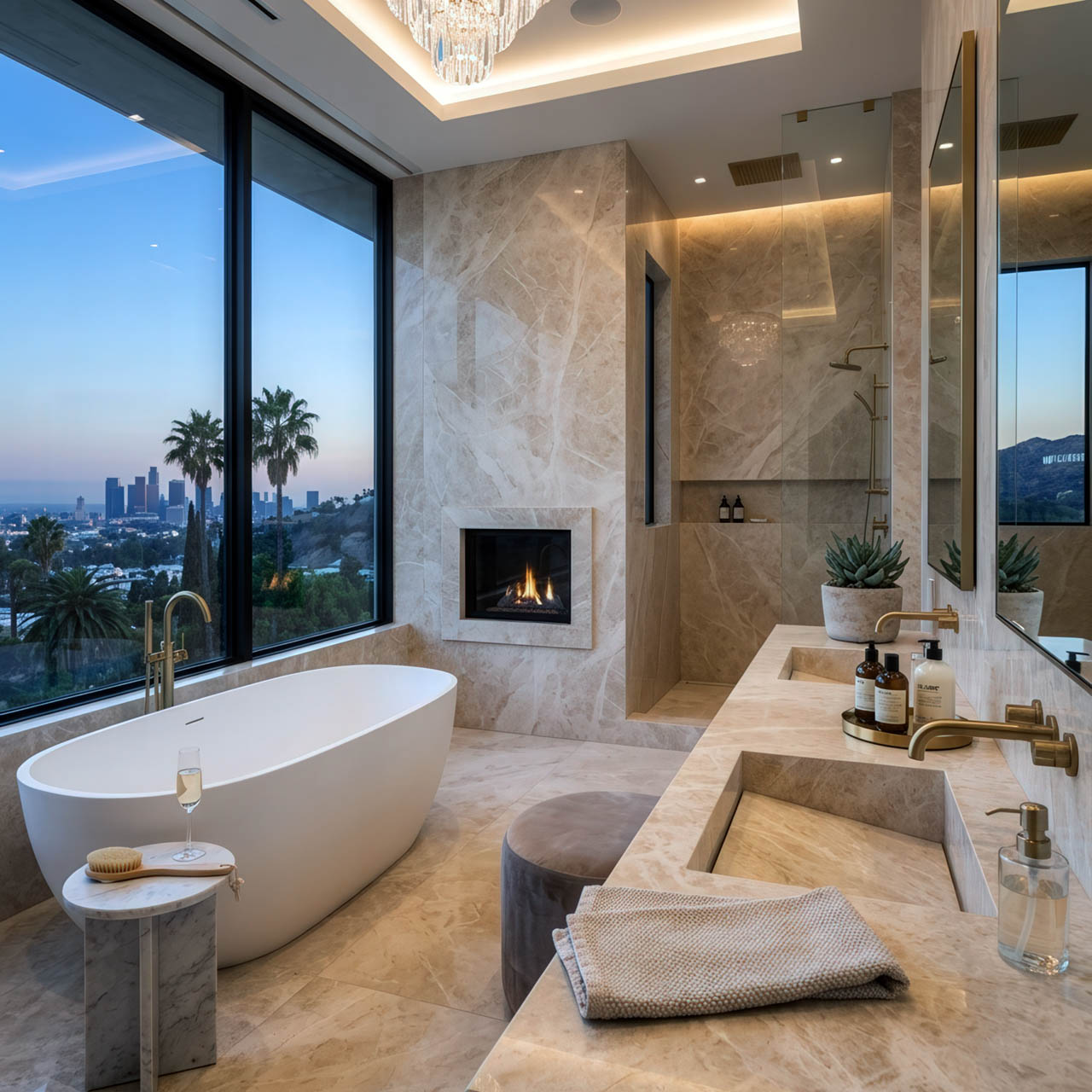
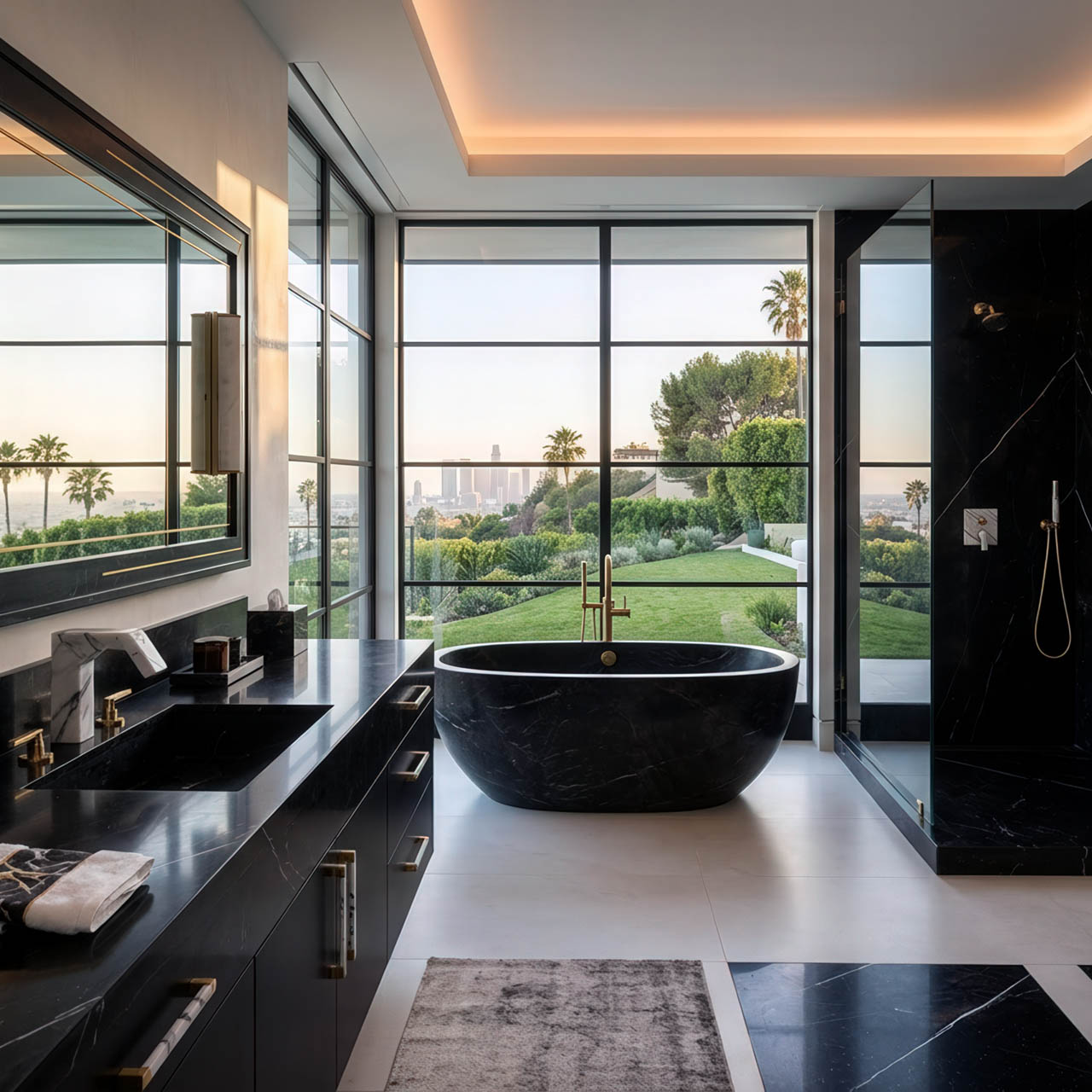
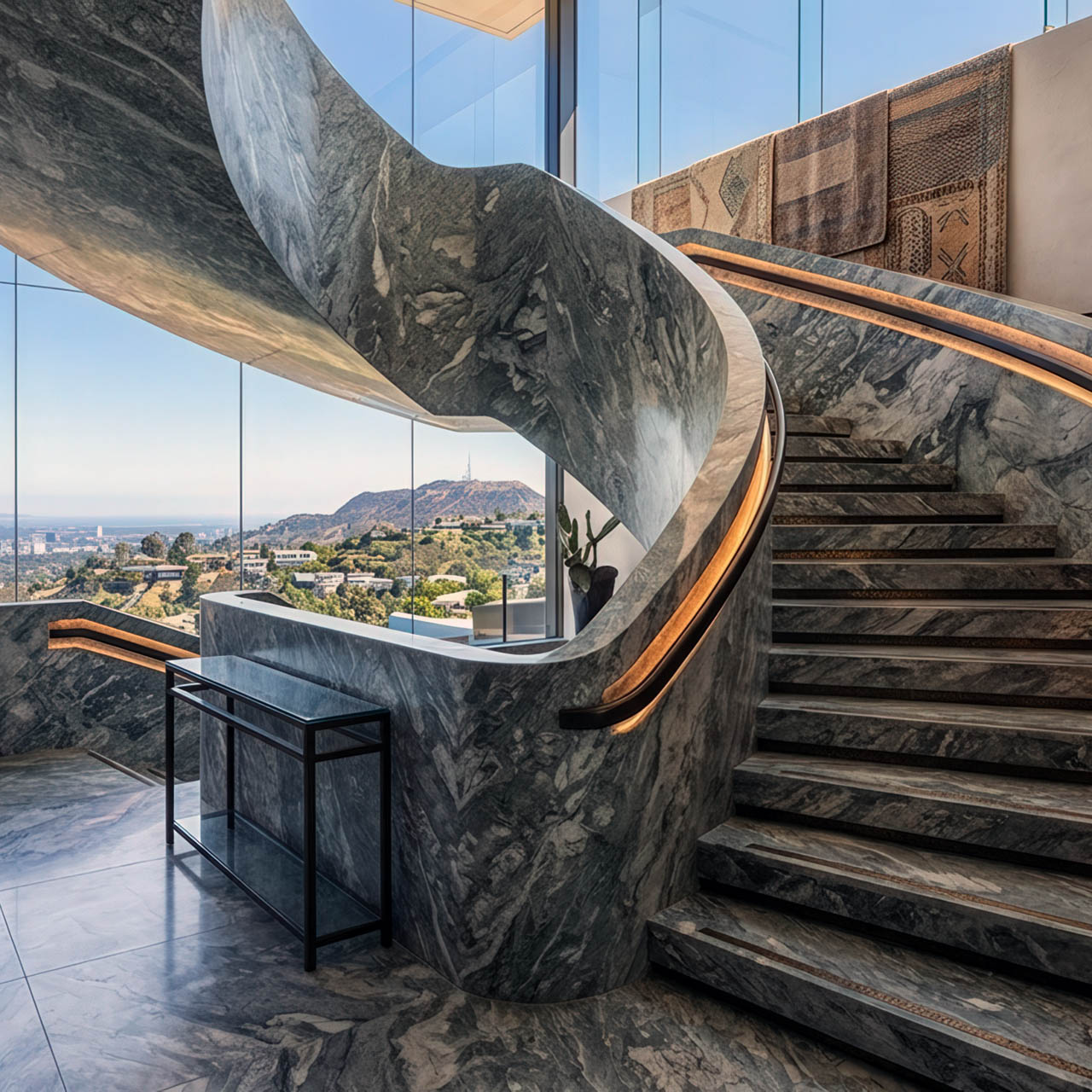
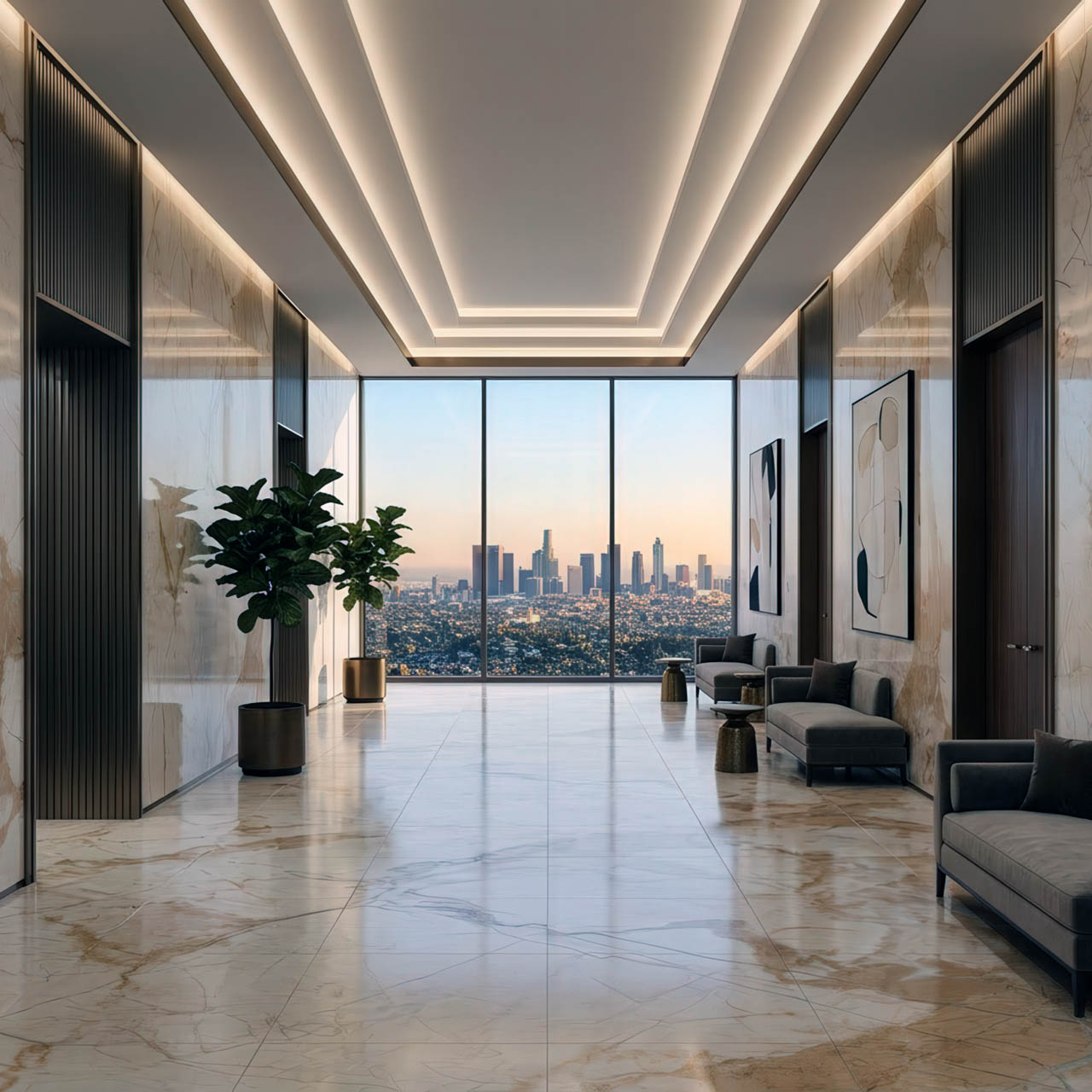
Ultra-thin marble refers to high-performance natural stone veneers precision-cut to thicknesses as slim as 0.5 mm to 5 mm. By bonding these veneers to advanced structural backings, the industry has transformed marble from a heavy, brittle building block into a versatile, lightweight “architectural skin” suitable for 21st-century engineering.
The Composite Structure
Because a 1-mm slice of stone cannot support itself, ultra-thin marble is always part of a composite system:
The Face: A genuine layer of premium marble, such as high-purity Miamivit calcite or Milas Pearl.
The Reinforcement: Typically aluminum honeycomb for rigidity, tempered glass for translucency, or fiberglass mesh for flexible applications.
The Bond: High-strength, aerospace-grade resins that ensure permanent substrate compatibility and resist thermal expansion.
Key Advantages
Feature Impact on Design
Weight Efficiency Reduces total mass by up to 80% compared to a 20 mm slab, making it the primary choice for luxury yachts and elevators.
Flexibility At its thinnest profiles (0.5 mm), the marble becomes semi-flexible, allowing it to “wrap” around curved pillars and organic furniture.
Translucency Slicing high-purity stone to ultra-thin levels reveals internal mineral patterns, perfect for backlit feature walls and lighting fixtures.
Impact Safety The composite backing acts as a shock absorber, making the surface far more resilient to cracks and shattering than solid stone.
Strategic Applications
Grand Scale Formats: Enables massive 1500 mm x 3000 mm panels that are light enough for two people to handle, significantly reducing on-site installation time.
Furniture Veneering: Used to create “all-stone” aesthetics for cabinetry, drawer fronts, and lightweight dining tables where solid stone would be too heavy.
Exterior Facades: Provides a prestigious natural stone finish for high-rise buildings while minimizing the structural “dead load” on the building’s frame.
BIM-Ready Workflows: For global projects, ultra-thin panels are modeled as high-precision 3D BIM assets, allowing for exact weight calculations and digital book-matching before production.
By utilizing ultra-thin technology, premium brands like Yükselen Marbles allow architects to apply the timeless luxury of natural stone in environments where weight, thickness, and complex geometry were once prohibitive barriers.
Technical Color Analysis Report Calacatta Viola marble
Primary Color Palette
The surface is composed of four distinct tonal groups. The interplay between these colors creates the "Viola" ...
Technical Color Evaluation Report: Burdur Beige Marble
This report provides a technical breakdown of the chromatic composition for the provided sample of Burdur Beige Marble (Ref: SL004). This specif...
Technical Color Report: SL003 Black Pearl Marble
This report provides a quantitative breakdown of the chromatic composition of the "Black Pearl" marble sample. The analysis identifies the primary and...
Technical Color Evaluation Report: Aegean Silver Marble
This report provides a technical analysis of the chromatic composition and surface characteristics of the Aegean Silver marble sample provide...
Technical Color Analysis Report: Aegean Cloudy Beige Marble
This report provides a technical breakdown of the surface color characteristics for the specimen identified as Aegean Cloudy Beige. The s...
The Return of Natural Luxury: Marble Accents in Modern Homes
As the "back to nature" movement gains momentum in interior design, marble—an ancient and storied material—is taking center stage. Once tr...