Technical Color Report Black Pearl Marble
Technical Color Report: SL003 Black Pearl Marble
This report provides a quantitative breakdown of the chromatic composition of the “Black Pearl” marble sample. The analysis identifies the primary and secondary color values and estimates their surface area distribution based on the provided high-resolution reference.
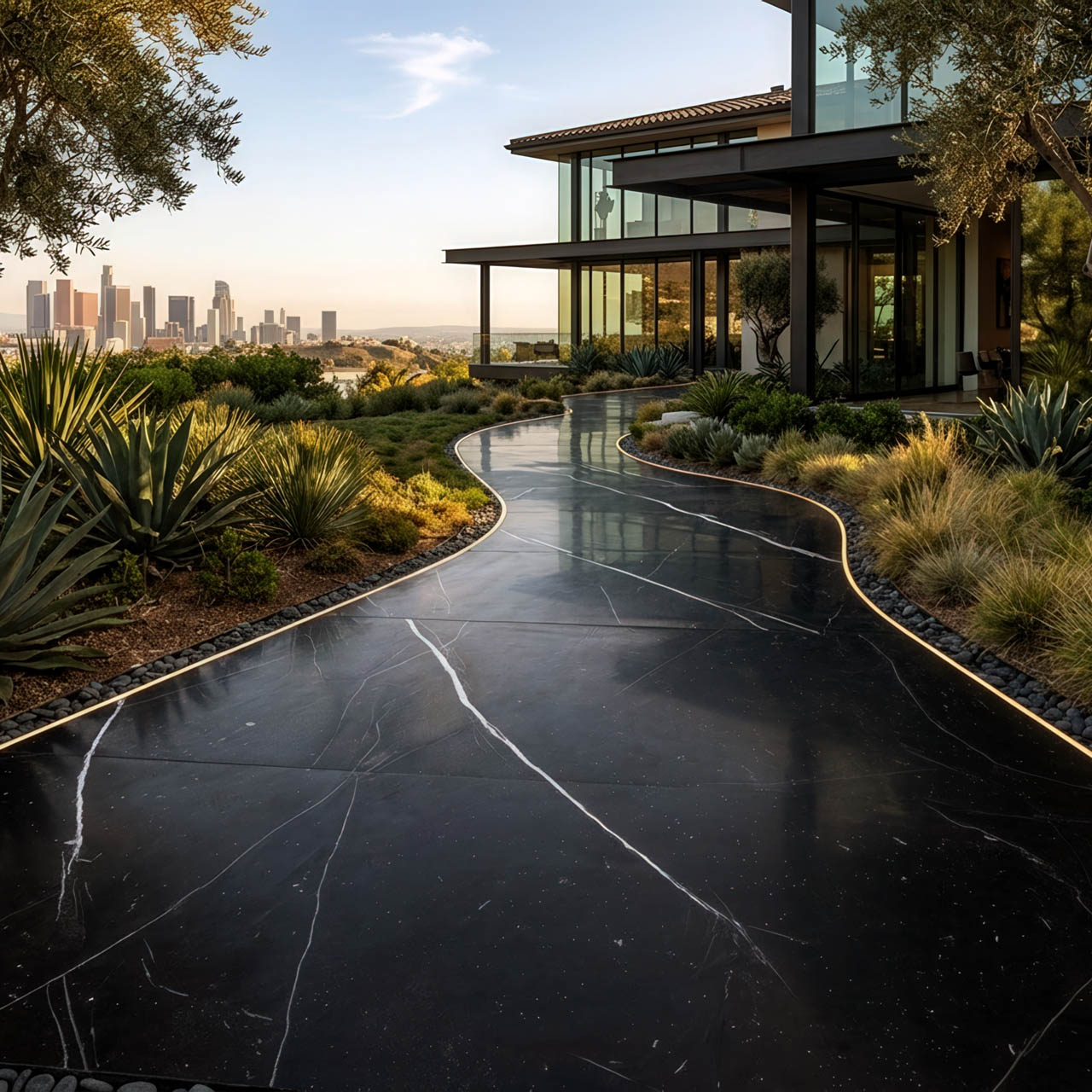
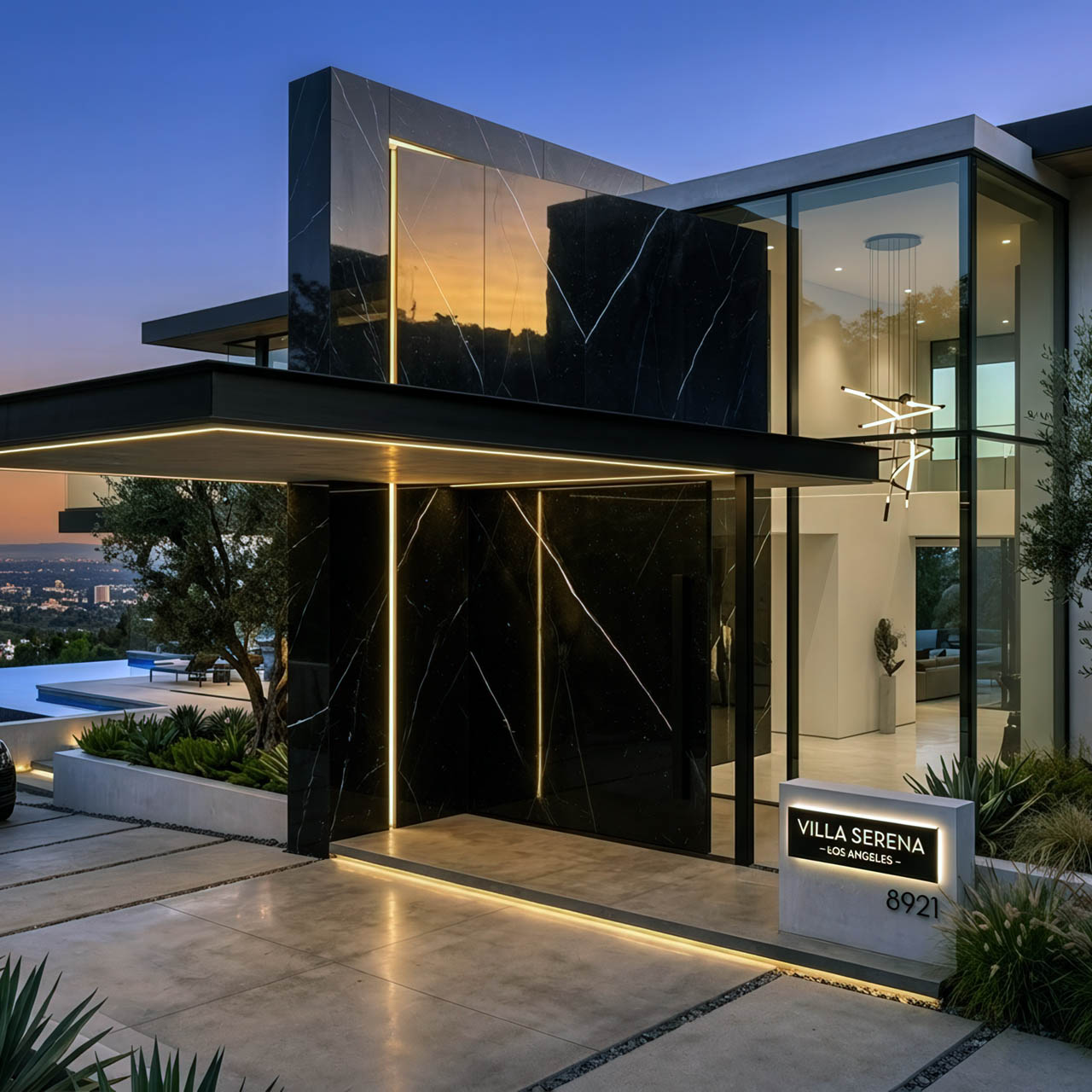
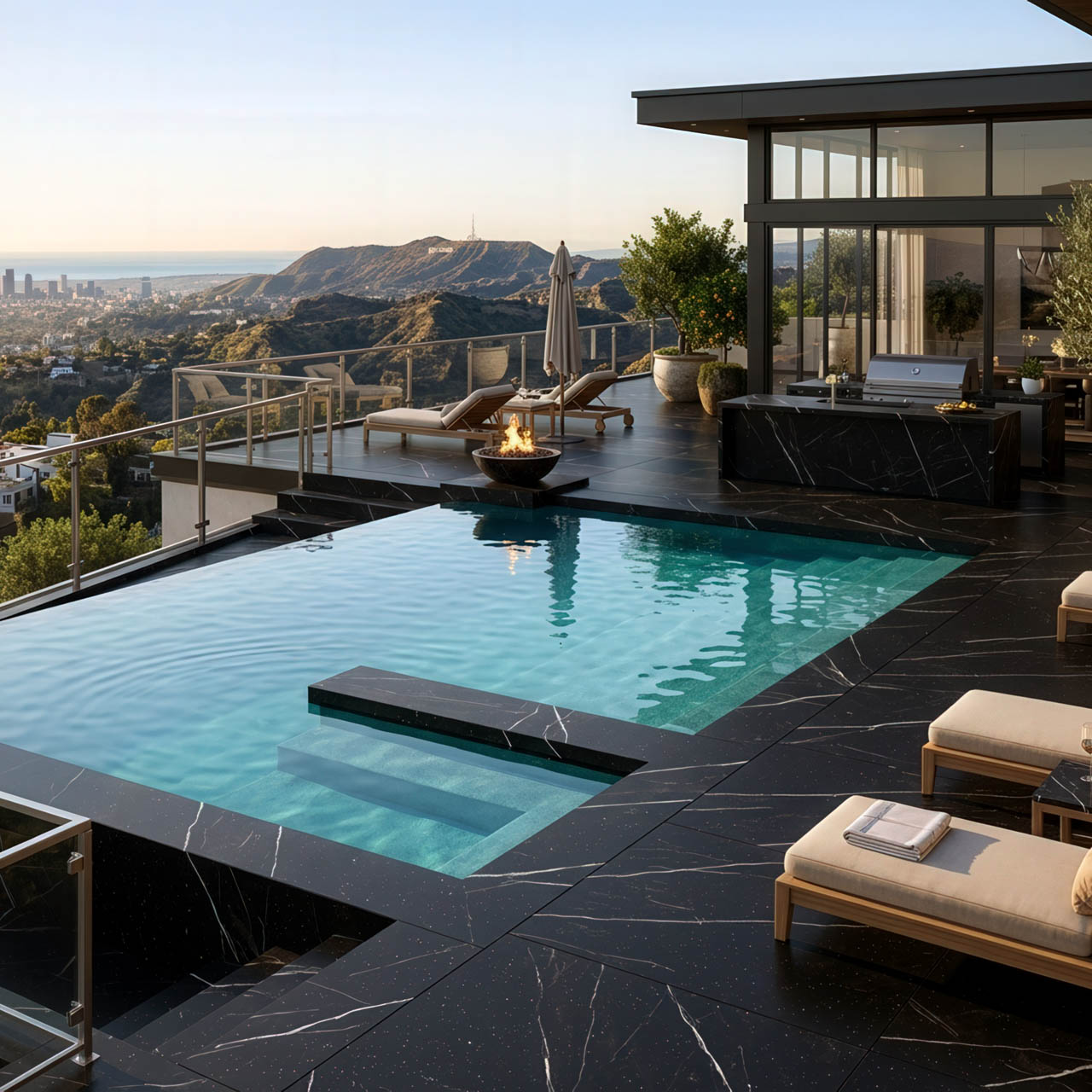
-
Color Composition Breakdown
The surface area is dominated by a monolithic dark base, punctuated by high-chroma mineral inclusions and sharp calcitic veins.
| Element | Estimated Surface Area (%) | Hex Code | RGB Value | Color Description |
| Base Matrix | ~88% | #0B0B0C | (11, 11, 12) | Obsidian Black: A dense, near-total light-absorbing black. |
| Secondary Transition | ~7% | #1C1917 | (28, 25, 23) | Charcoal Umber: Deep brown-grey tones found in translucent zones. |
| Stellar Inclusions | ~4% | #A8A9AD | (168, 169, 173) | Cool Silver: Fine micro-crystals distributed across the slab. |
| Primary Veining | ~1% | #E8E8E8 | (232, 232, 232) | Pure Calcite: The high-contrast strike traversing the diagonal. |
-
Chromatic Analysis & Contrast Ratios
- Dynamic Range: The marble exhibits an extreme dynamic range between the Base Matrix and the Primary Veining. The contrast ratio is approximately 21:1, providing exceptional visual clarity and architectural “sharpness.”
- Color Temperature: The overall temperature is Cool-Neutral. While the Charcoal Umber (7%) provides a hint of warmth, the abundance of Obsidian Black and Silver Inclusions pulls the aesthetic toward a sleek, modern palette.
- Saturation Profile: The base is desaturated to the point of “true black,” allowing the white veins to appear brighter than their actual luminosity value due to the simultaneous contrast effect.
-
Technical Observations for Fabrication
- Reflectivity Potential: Given the high percentage of Obsidian Black, this stone will act as a “black mirror” when polished. Light sources will reflect with high fidelity, highlighting the Silver Inclusions.
- Pigment Stability: The primary black coloration appears to be deep-seated mineral carbon or organic matter, suggesting high UV stability for interior applications near large windows.
- Seam Management: Due to the 88% black surface area, epoxy color-matching should focus on the #0B0B0C base to ensure invisible seams, while “vein-tracing” should be used specifically at the intersection of the primary white strikes.
Among the elite dark stones of the architectural world, Black Pearl Marble (often sourced from the Diyarbakır region of Turkey) is prized for its intense, deep black base and subtle, pearl-like mineral inclusions. Unlike the more graphic Nero Marquina with its sharp white veins, Black Pearl offers a more consistent, “granular” texture that exudes a quiet, sophisticated power.
In 2026, as the “Dark Maximalism” trend takes over luxury sectors, Black Pearl has become the material of choice for architects who want the drama of black stone without the erratic movement of heavy veining.
1. Monolithic Kitchen Islands and Culinary Art
In 2026 kitchen architecture, the “Black Pearl” island is a staple of Industrial Luxe.
-
Seamless Slabs: Large-format slabs (2–3 cm thick) are used to create “block” islands where the seams are virtually invisible. The stone’s high density (2720 kg/m3) makes it incredibly resistant to the heat and impact of a professional-grade kitchen.
-
The “Leathered” Finish: While polished was the historical standard, the 2026 favorite is the Leathered or Brushed finish. This gives the stone a matte, tactile quality that hides fingerprints and emphasizes the “pearl” minerals within the dark matrix.
2. Atmospheric “Sanctuary” Bathrooms
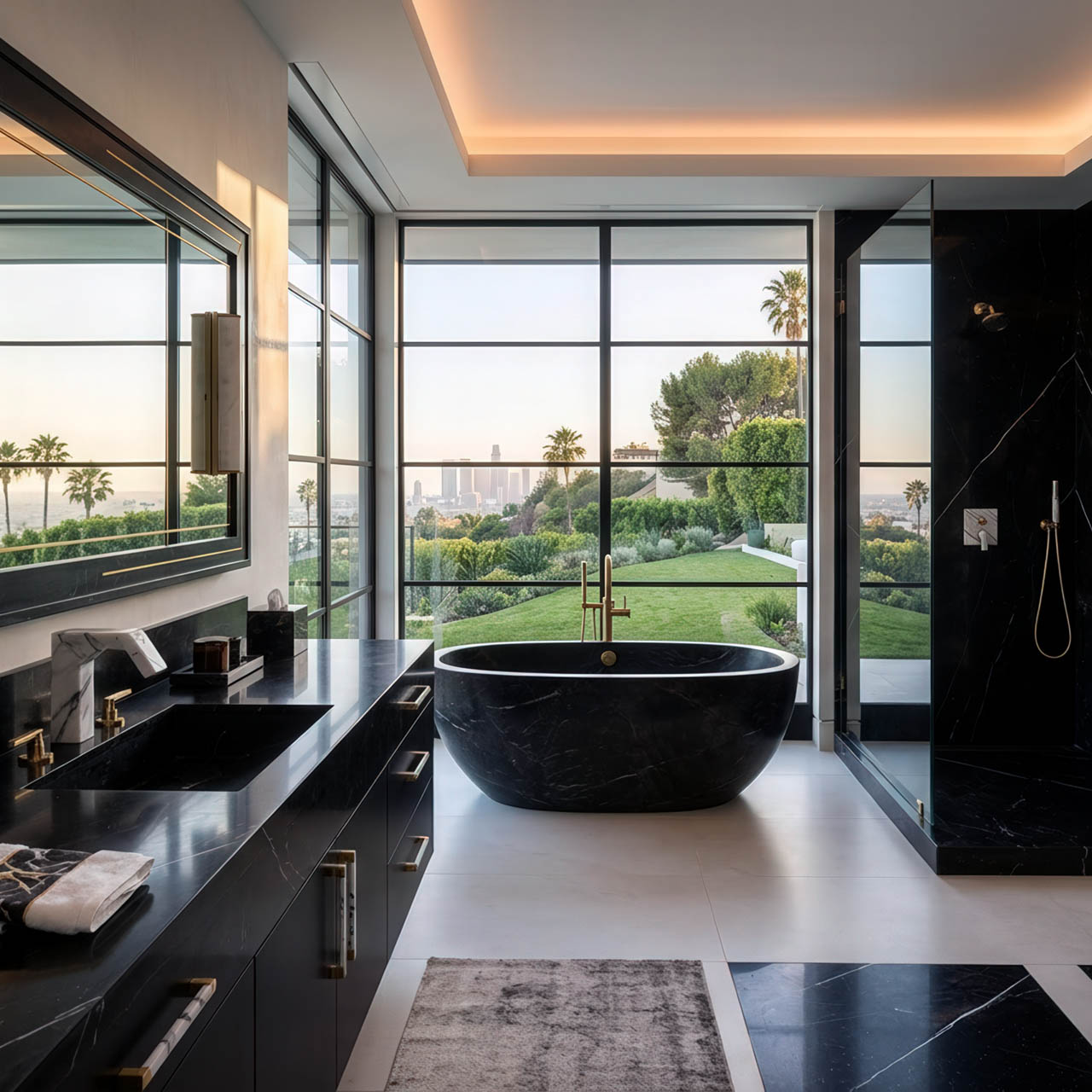
Black Pearl is increasingly used for “Stone Drenching” in high-end bathrooms to create a moody, spa-like atmosphere.
-
Walk-in Enclosures: Architects use full-slab panels for shower walls. The stone’s low water absorption (0.3%) ensures it remains pristine in high-moisture environments.
-
Integrated Sinks: Because of its uniform structural integrity, it is the ideal candidate for CNC-milled basins. A single block of Black Pearl can be carved into a double vanity, providing a sleek, uninterrupted aesthetic that pairs perfectly with Brushed Brass hardware.
3. High-Traffic Commercial Flooring and Steps
Thanks to its impressive compressive strength (138.4 MPa), Black Pearl is one of the few marbles durable enough for intense commercial use.
-
Luxury Hotel Lobbies: It provides a stable, dark foundation that makes vibrant furniture and art “pop.” Its ability to be polished to a mirror-like finish reflects light across expansive halls, preventing the dark color from feeling heavy.
-
Architectural Staircases: Black Pearl is frequently specified for massive, solid-tread staircases. Its durability ensures the “nosing” of the steps remains sharp and chip-free even after years of foot traffic.
4. Modern Fireplace Portals and Hearths
In living spaces, Black Pearl functions as a visual anchor.
-
Minimalist Surrounds: In 2026, designers are opting for simple, clean-lined fireplace portals. The deep black stone absorbs and then radiates the heat of the fire, while the “pearl” inclusions catch the light of the flames.
-
Floating Hearths: Its flexural strength (34.15 MPa) allows for long, cantilevered hearth stones that act as both a safety feature and an additional seating ledge.
Technical Specification Table
| Property | Value (Average) |
| Density | 2.72 g/cm3 |
| Compressive Strength | 103.98–138.4 MPa |
| Water Absorption | 0.30% |
| Mohs Hardness | 4 |
2026 Design Pairing Guide: “The Stealth Aesthetic”
To achieve the most contemporary look with Black Pearl, architects suggest these 2026 pairings:
-
Metal Accents: Use Matte Black or Gunmetal for a “stealth” look, or Antique Brass for a warm, high-end contrast.
-
Wood Pairing: Pair with Natural Walnut or Smoked Oak. The organic warmth of the wood balances the “cool” energy of the black stone.
-
Lighting Strategy: Use Recessed Warm LEDs (3000K). Lighting placed in niches or under-cabinet zones will highlight the granular “pearl” texture of the marble.
Maintenance Note for 2026: Because Black Pearl is a darker stone, it can show mineral deposits from hard water more easily than white marble. In 2026, the use of penetrating oleophobic sealers is mandatory for kitchen and bath applications to ensure the stone remains “stain-proof” without altering its deep, natural color.