
Optimizing Construction Inspection via Autonomous BIM-Integrated Drone Telemetry
Optimizing Construction Inspection via Autonomous BIM-Integrated Drone Telemetry
A Comprehensive Technical Process Framework for Total Phase Control
- System Architecture & Drone Integration
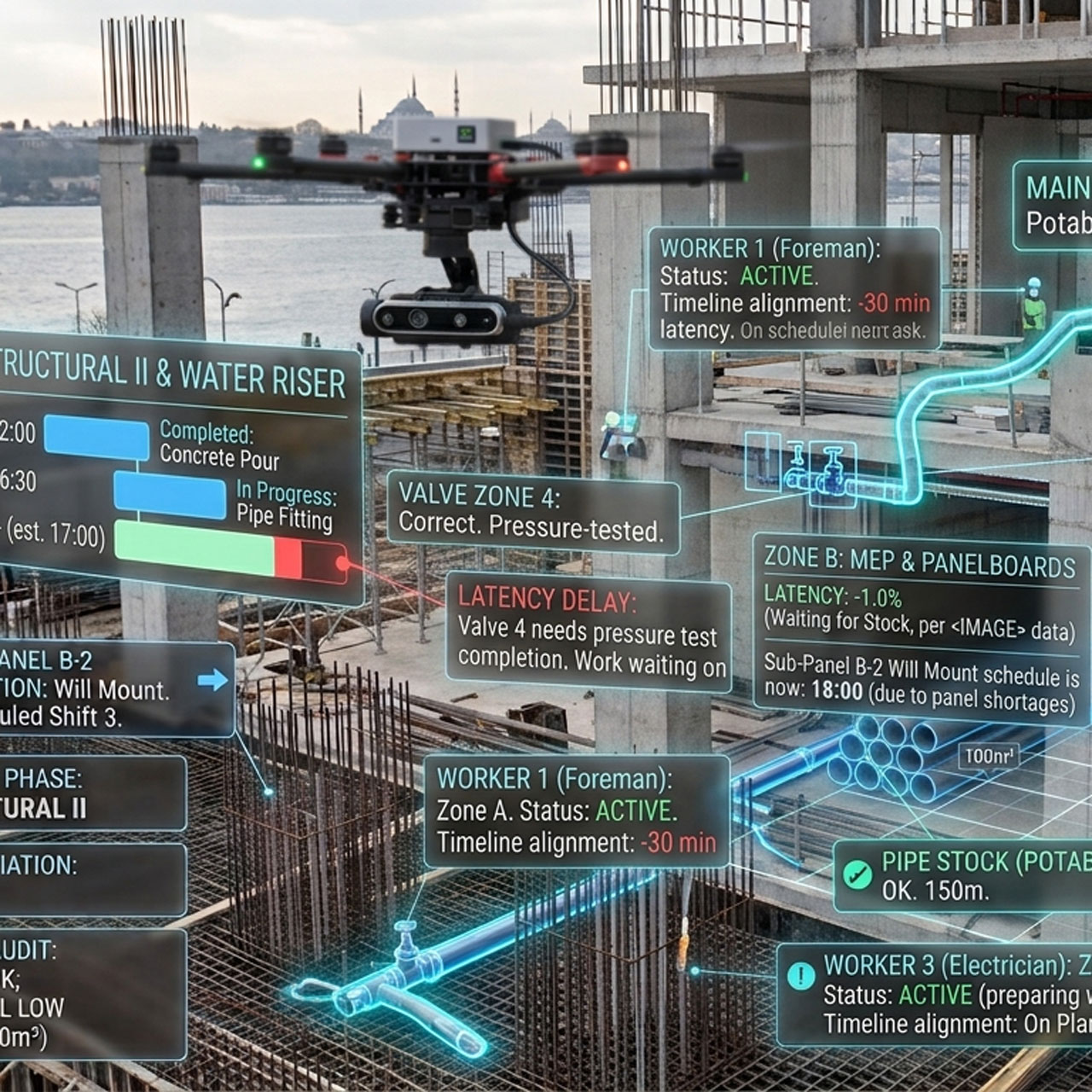
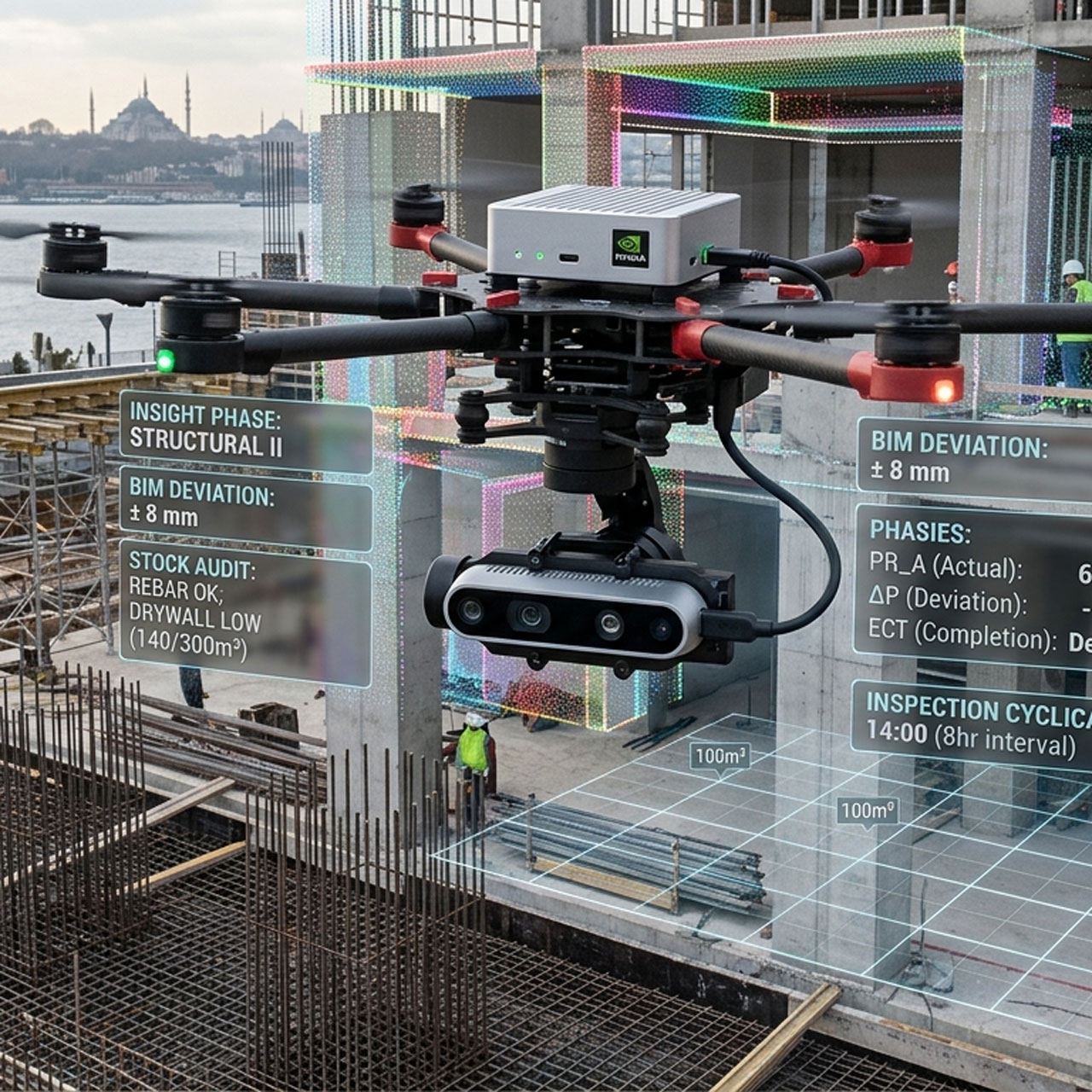
To establish a highly precise BIM Building Total Phase Control System, an advanced Intel RealSense depth camera system (such as the D435i or D455) is dynamically integrated onto a commercial enterprise-grade drone platform. This fusion allows for real-time translation of physical field coordinates into digital twin space.
BIM Drone Inspection Electric Floors
BIM Drone Inspection BI Dashboard
BIM Drone Inspection AI Monitor
Hardware & Sensor Payloads
- Vision Engine: The Intel RealSense camera leverages stereo vision combined with an onboard Inertial Measurement Unit (IMU) to generate high-density 3D point clouds and infrared imagery that remain unaffected by volatile site lighting conditions.
- Mounting & Stabilization: The camera payload is supported by a 3-axis brushless gimbal system that maintains a strict nadir or off-nadir orientation, decoupling camera stability from the drone’s tactical pitch and roll adjustments.
- Onboard Processing: An onboard companion computer (such as the NVIDIA Jetson Orin Series) is mounted directly to the chassis to process edge-based spatial AI algorithms, deep learning object identification, and real-time structural data feeds.
Autonomous Navigation & Obstacle Avoidance
Using the dense depth maps generated by the Intel RealSense camera, the drone runs simultaneous localization and mapping (SLAM) algorithms. This configuration enables precise GPS-denied navigation inside dense building skeletons, establishing dynamic 3D spatial boundaries to successfully avoid scaffolding, temporary columns, hazards, and personnel.
- 8-Hour Periodic Inspection Routine & Process Plan
Achieving comprehensive phase control requires uninterrupted, structural data feeds. The inspection framework operates on a strict 8-hour cyclical schedule, precisely matching construction shift handovers to continuously evaluate progress, material utilization, and structural alignment.
Cyclical Shift Schedule Breakdown
- 06:00 – Pre-Shift Alignment: System diagnostics, route safety validation, battery thermal optimization, and synchronization of the latest BIM design change packages.
- 14:00 – Mid-Shift Verification: Active structural tracking, checking concrete curing states, monitoring temporary shoring, and evaluating column framing accuracy during peak daily operational hours.
- 22:00 – Post-Shift Reconciliation: Final material stockpile evaluation, accurate volume calculations of consumed resources, site safety perimeter mapping, and generation of the daily automated delta report.
- Physical Progression: Foundation Stage to Interior Design Completion
The drone’s optical and depth parameters are dynamically adapted to each specific phase of the structural lifecycle, matching real-world site progression directly against chronological BIM milestones.
Phase 1: Foundation & Substructure
- Drone Objective: Volumetric excavation tracking, mud slab level verification, and rebar grid geometry mapping.
- BIM Inspection Metric: The camera scans the layout of foundation reinforcement structures. Computer vision algorithms cross-verify the spacing, total count, and diameter of rebar with the structural model prior to concrete pouring, flagging misplacements instantly.
Phase 2: Core Superstructure & Framing
- Drone Objective: Verticality verification, structural component alignment, and slab thickness tracking.
- BIM Inspection Metric: As columns, shear walls, and load-bearing beams rise, the system evaluates structural plumbness. Point clouds are superimposed onto the structural design model to flag any deviation greater than 5 mm from the vertical axis.
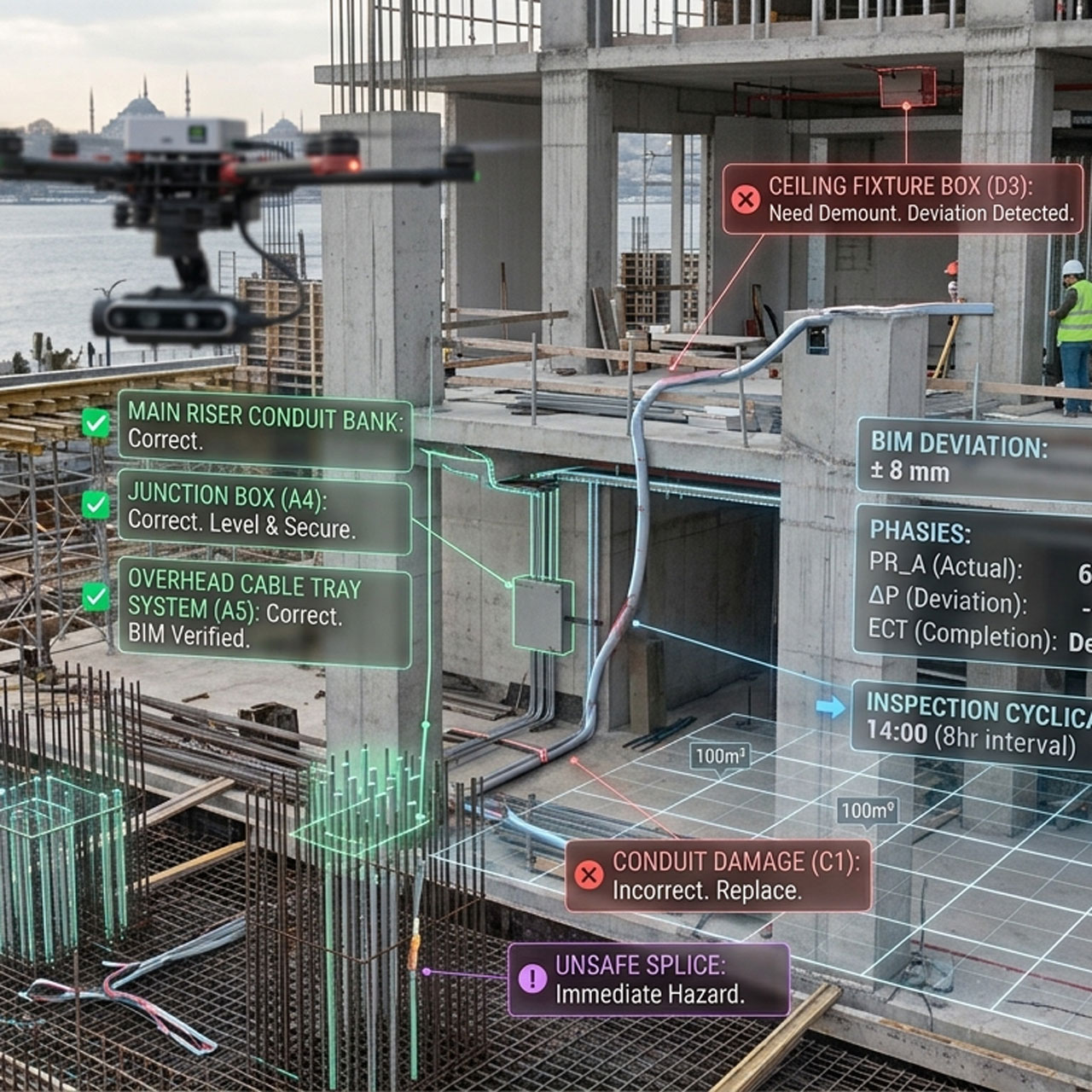
Phase 3: MEP (Mechanical, Electrical, Plumbing) First-Fix
- Drone Objective: Spatial clash detection within highly dense utility corridors and vertical riser shafts.
- BIM Inspection Metric: Navigating through open framing, the drone records the exact coordinate routing of HVAC ducts, electrical conduits, and wastewater plumbing. The system identifies deviations where a physical element clips a future drywall partition or ceiling suspension wire.
Phase 4: Enclosure & Interior Design Completion
- Drone Objective: Surface finish analysis, drywall placement validation, and automated fixture tracking.
- BIM Inspection Metric: In the final stages, the RealSense camera maps finished wall flatness, validates the layout of acoustic ceiling grids, counts installed lighting fixtures, and checks that high-end finishes match the architectural material schedule.
- Edge AI Object Identification & Material Stock Tracking
The intersection of depth sensing and edge AI converts raw visual data into highly accurate inventory and quality metrics.

BIM Drone Inspection Phone Control
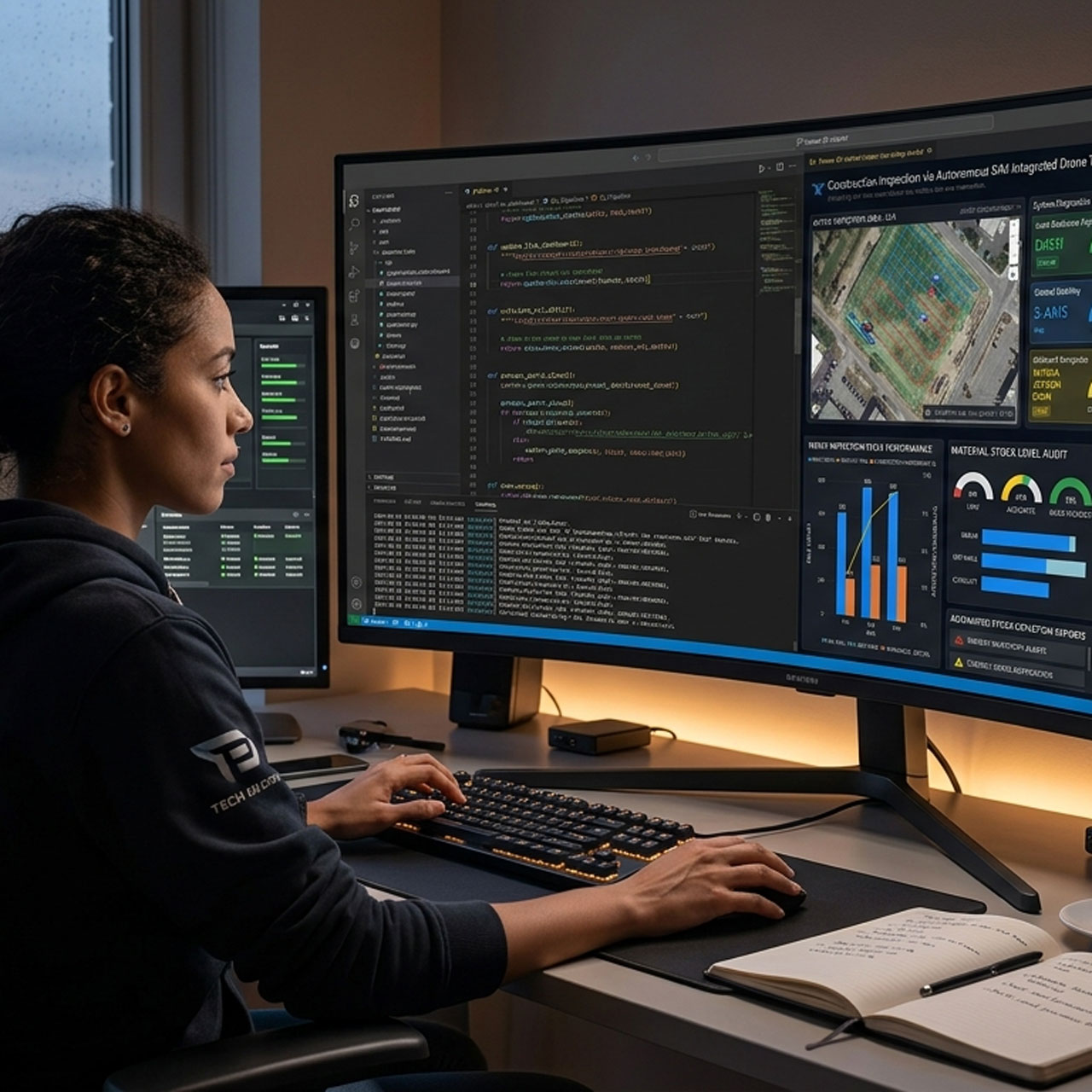
BIM Drone Inspection Command Center Control
Rapid Object Identification
Using deep learning models (such as customized YOLO architectures optimized for construction components) running on the companion computer, the drone recognizes objects in real time. It can instantly differentiate between structural steel beams, drywall panels, CMU blocks, and specific MEP components, cataloging their exact X, Y, Z coordinates within the site coordinate system.
Inventory and Stock Level Auditing
- Volumetric Scanning: By executing a localized orbital path over material storage zones, the Intel RealSense camera generates high-density surface meshes of raw bulk materials (e.g., gravel, sand) or stacked pallets (e.g., marble slabs, bricks).
- Automated Stock Depletion Reports: The system automatically calculates the volume of materials on-site. If the planned BIM timeline dictates that 500 meters of piping should be installed by tomorrow morning, but the drone identifies only 100 meters remaining in stock with zero pending deliveries, the system automatically triggers an urgent inventory alert.
- Correct Usage Verification: Beyond counting, the system checks where the materials are being used. It compares the material specifications (e.g., verifying that premium interior stone tiles are not accidentally used in high-traffic exterior applications) against the precise material assignment in the BIM plan.
- Automated Metrics: As-Built Analytics
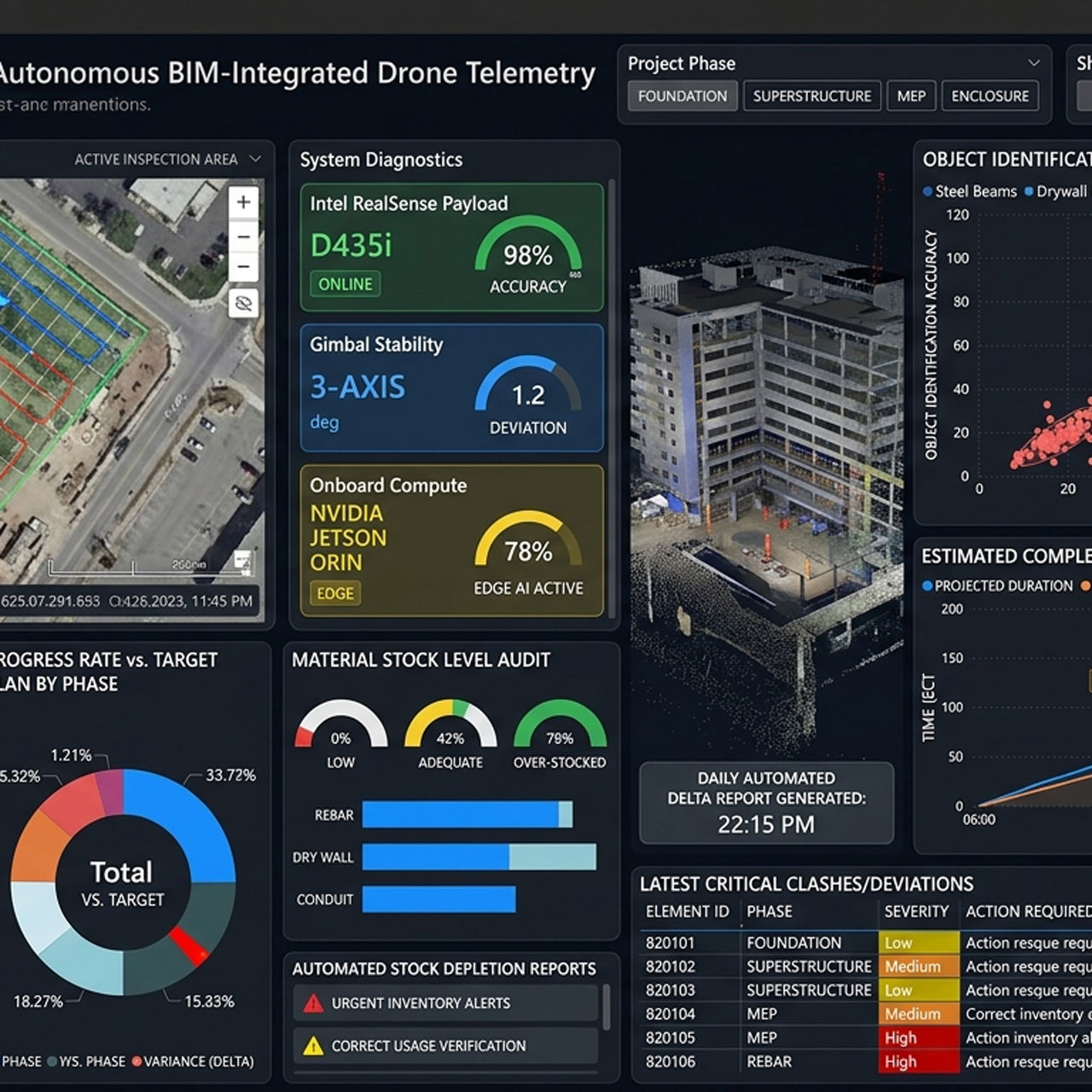
The core output of each 8-hour flight loop is a set of distinct, data-driven parameters that feed directly into the project’s management dashboard:
- Estimated Completion Time (ECT): Calculated dynamically using the actual rate of physical installation versus the remaining scope defined in the BIM file.
- Progress Rate: The exact percentage of elements successfully transitioned from ‘planned’ to ‘verified as-built’ within a given time frame.
- Comparison of Progress Rate with Plan: A clear delta analysis highlighting schedule variance. If the system identifies a variance where the actual progress curve falls below the baseline schedule curve, it automatically isolates the lagging phase (e.g., framing or MEP).
| Phase Monitored | Target Plan Rate | Actual Progress Rate | Variance (Delta) | Material Stock Level |
| Foundation | 100% | 100% | 0% | Optimal |
| Superstructure | 45% | 41% | -4% (Delay) | Rebar Stock Low |
| MEP First-Fix | 12% | 8% | -4% (Delay) | Conduit Adequate |
| Interior Finish | 0% | 0% | 0% | Over-Stocked |
- Financial & Operational ROI Challenge for Project Leadership
While the implementation of a fully automated, drone-driven BIM control system requires an upfront investment in hardware, software integration, and pilot/operator protocols, the downstream savings in rework prevention and schedule compression are substantial.
Operational Efficiency Challenge:
Given a standard 1,000 m² commercial building footprint operating under standard manual inspection intervals (where human error, hidden reworks, unnoticed structural deviations, and material waste typically account for an average of 10% to 12% of total phase costs):
• How much total cost savings can your construction company realize per 100 m² by eliminating structural reworks through early 8-hour deviation tracking?
• What percentage increase in logistical and material procurement efficiency can your teams achieve when stock depletion and misplaced assets are audited autonomously three times a day?
#ConstructionTech #BIM #DroneTelemetry #DigitalTwin #ConTech #ConstructionInnovation #EdgeAI #ProjectManagement #RealSense