AI, The Next Frontier: From Passive Web to Trusted Enterprise and Government Data Ecosystems

AI, The Next Frontier: From Passive Web to Trusted Enterprise and Government Data Ecosystems
The evolution of the internet since the turn of the millennium has been defined by a persistent state of flux—a “growing pain” characterized by the struggle to manage, categorize, and protect the integrity of human knowledge. While global powers like the United States and China currently dominate the narrative of Artificial Intelligence (AI) advancement, we are currently at a critical inflection point. The race for AI supremacy is not merely about algorithmic speed; it is about the transition from unstructured data to high-fidelity, actionable intelligence.
Beyond Web a
The Structural Shift: Beyond the Physical Web
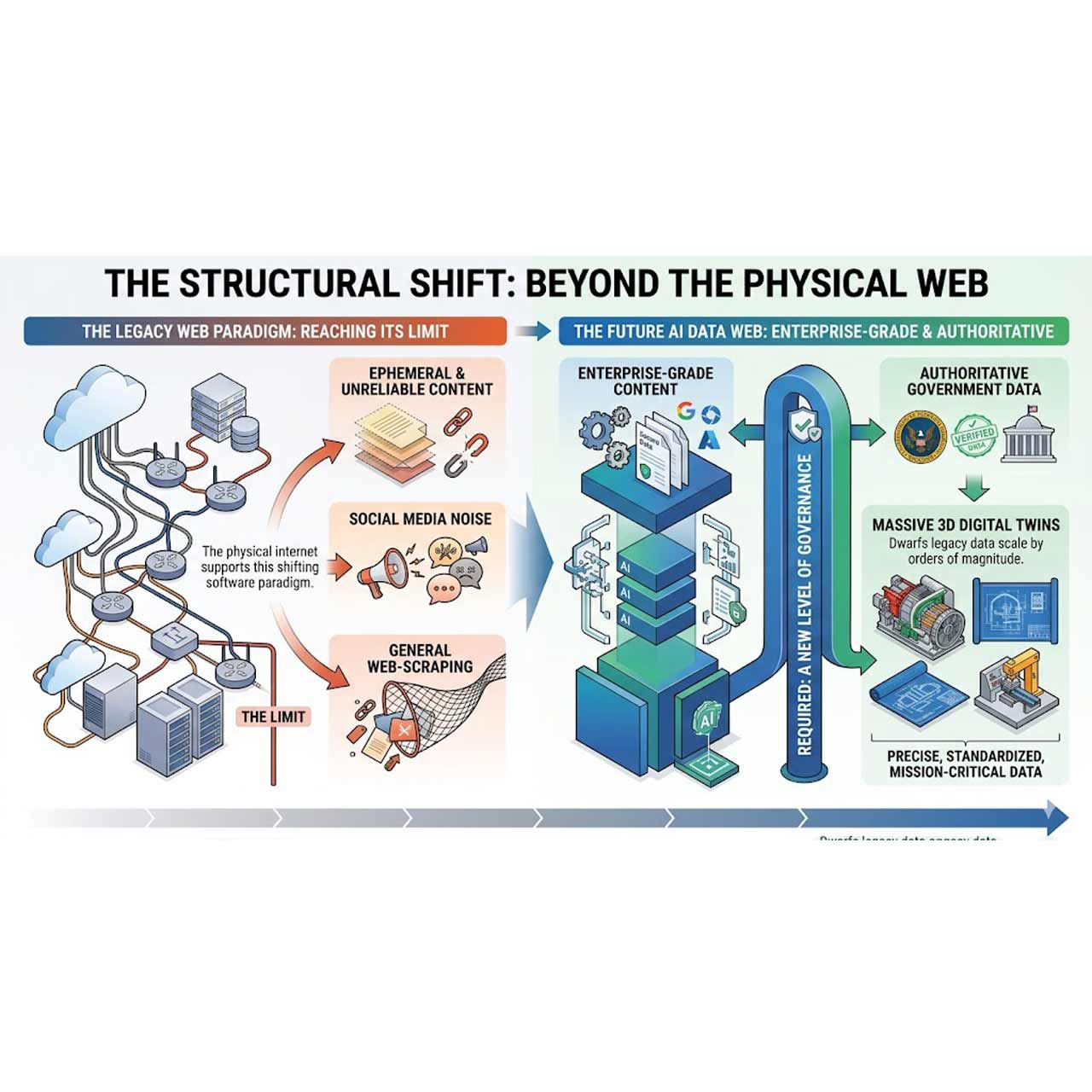
We must distinguish between the internet as a physical infrastructure—a network of cables, routers, and data centers—and the “Web” as a shifting software paradigm. The legacy web, often cluttered with ephemeral and often unreliable content, is reaching its limit. The future of AI relies on Enterprise-grade content and Authoritative Government data.
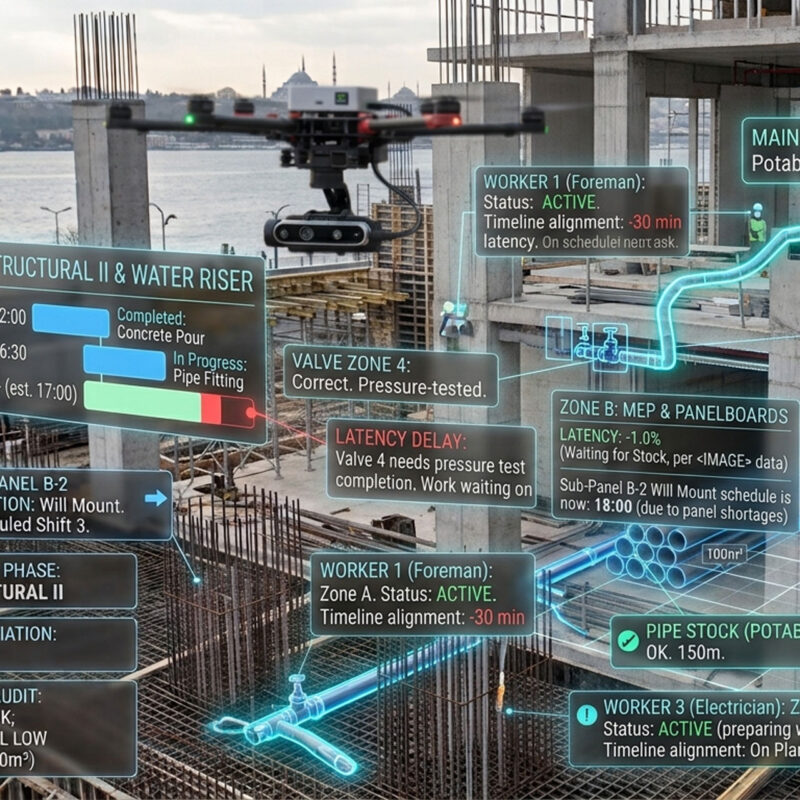
When we consider the massive influx of 3D engineering, architectural, and manufacturing data, the scale dwarfs the current public internet by orders of magnitude. Unlike the noise of social media or general web-scraping, this data is precise, standardized, and mission-critical. Integrating these “Digital Twins” of the physical world into AI models requires a new level of governance.
The Role of Authoritative Data and Global Governance
Government transparency initiatives, such as the Open Data movement initiated in the United States and similar recent efforts in Turkey, are the catalysts for this transition. By opening verified datasets to the public and private sectors, governments are laying the groundwork for a more robust digital economy.
However, data alone is not enough. The role of Language Institutions and regulatory bodies in standardizing enterprise documentation is paramount. For nations like Turkey, Egypt, Algeria, Malaysia, South Korea, and Japan, there is a unique opportunity to leapfrog legacy systems. By focusing on the structural integrity of industrial, architectural, and administrative data, these nations can position themselves as hubs for the next generation of AI-driven, high-trust digital ecosystems.
The Future: A High-Fidelity Internet
We are moving toward an era where AI models will be trained on curated, verified, and multi-dimensional datasets rather than the entirety of the unstructured web. This requires:
-
Standardization: Adopting global standards for data interoperability (e.g., ISO 19650 for BIM).
-
Trust Architecture: Utilizing cryptographic verification to ensure the provenance and accuracy of enterprise and government records.
-
Semantic Categorization: Moving beyond keyword search to intelligent, context-aware information retrieval that understands the physics and engineering constraints of 3D data.
The transition from a “quantity-based” internet to a “quality-based” knowledge grid is inevitable. Governments that invest in the infrastructure for high-fidelity data will not only secure their digital sovereignty but will also set the standards for the global AI landscape of the next decade.
Key References & Further Reading
-
Open Government Data (OGD) Initiatives: The movement towards transparent, machine-readable government data.
-
Digital Twin Consortium: Defining the standards for integrating physical and digital engineering data.
-
Building Information Modeling (BIM) Standards: The technical backbone for 3D engineering and construction data exchange.
#ArtificialIntelligence #EnterpriseData #OpenGovernment #DigitalTransformation #BIM #DataGovernance #FutureOfInternet #IndustrialAI