The $30 Trillion Capital Wave: Why Global Megafunds are Positioning into Turkey’s New Profit Centers
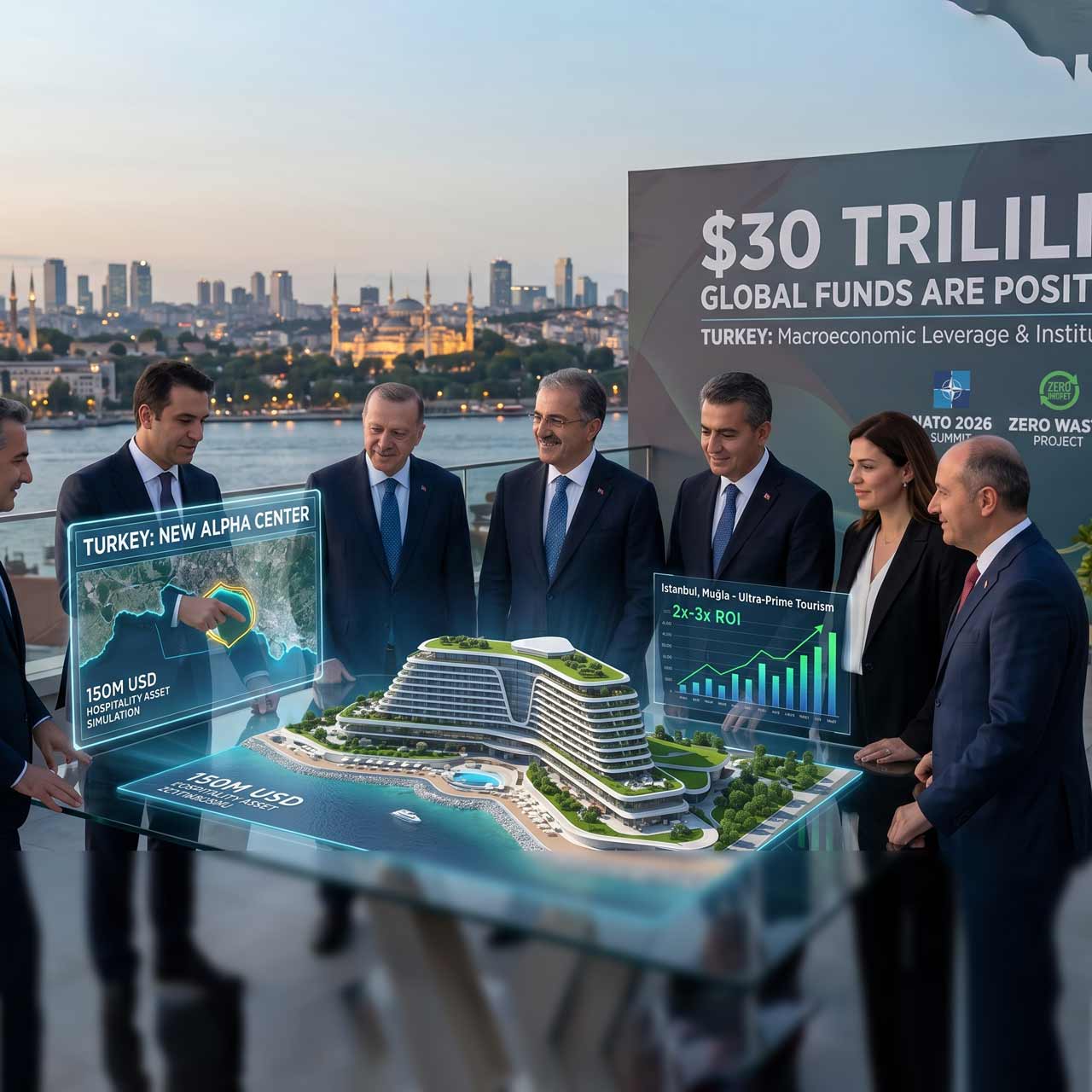
The $30 Trillion Capital Wave: Why Global Megafunds are Positioning into Turkey’s New Profit Centers
Global megafunds commanding a combined total of over $30 Trillion in assets under management (AUM) are actively executing deep due diligence and deploying structural capital into a newly emerging geographic profit epicenter. The world’s largest sovereign wealth and private equity giants have significantly re-allocated their screening metrics to target high-yield tourism, hospitality, and mega-structure asset classes in Turkey—specifically across premium zones in Istanbul, Muğla, and along the strategic Mediterranean-Aegean coastal bands. Advanced investment negotiations are moving forward aggressively as Western markets experience yield compression and stagflationary pressures.
Yedi Mavi 03
Yedi Mavi 04
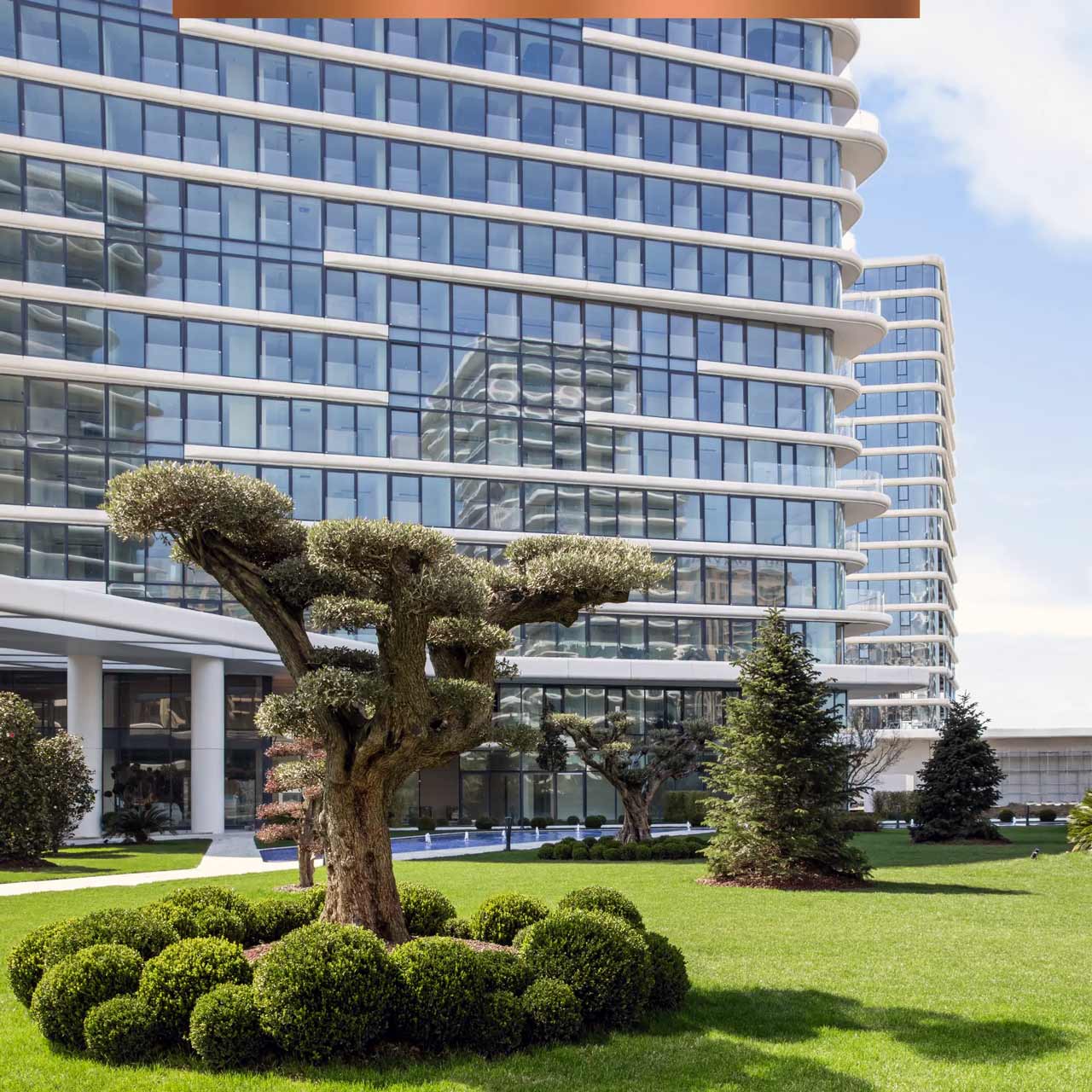
Yedi Mavi 05
The Macroeconomic Catalysts: Why the Smart Money is Shifting
While mainstream retail investors focus on surface-level currency fluctuations, institutional asset managers are leveraging deeper macro structural pivots. The fundamental driver for this migration of global capital is simple: Turkey-based premium real estate and hospitality investments are currently delivering 2x to 3x higher yields compared to stagnant Western European and North American counterparts. This exceptional alpha is reinforced by three powerful structural anchors:
-
Geopolitical Realignment & Institutional Trust: Institutional security and global diplomatic alignment are heavily underscored by Turkey hosting high-profile international defense milestones, such as the landmark 2026 NATO Summit in Ankara. This positions the jurisdiction as an indispensable, highly secure geopolitical node.
-
Global Green Standards & Sovereign Commitment: The state-backed implementation of global sustainability initiatives, notably the Zero Waste Project, has aligned municipal development with international green bonds and BIM 2.0 digital construction frameworks. This framework enables institutional funds to fulfill strict global ESG mandates seamlessly, which was prominently highlighted at the Zero Waste Forum in Istanbul and acknowledged via the UNDP Turkey’s First Global Goals Action Award.
-
Advanced Tech Integration & Reforms: The sovereign focus on AI-driven hospitality technologies, next-generation construction informatics, and massive regulatory investment reform packages has significantly eliminated bureaucratic frictions for foreign direct investment (FDI), championed closely by the Investment Office of the Presidency of the Republic of Turkey.
The Operational Asymmetry (The True Alpha Driver): The core financial mechanic powering these extraordinary returns is a sophisticated FX-denominated revenue versus Lira-based operational cost asymmetry. Properties generate hard currency inflows (USD/EUR) from high-net-worth international travelers, while anchoring capital expenditure (CAPEX) and ongoing operational expenditure (OPEX) in highly competitive local-tier cost bases (see macro trends detailed by BBC Türkçe).
Anatomy of a $150 Million Ultra-Luxury Hospitality Asset
To contextualize this financial dynamic, we analyze a benchmark $150 Million ultra-luxury beach-front hotel development along Istanbul’s high-barrier Zeytinburnu coastline. This coastal tier represents prime, non-replicable premium real estate. Similar outsized yield profiles are observed in ultra-prime Istanbul sub-markets including Şişli, Beşiktaş, Ortaköy, İstinye, Tarabya, and Bebek, where land scarcity drives compound annual capital appreciation.
Phase 1: Short-Term Optimization (Years 1 – 2) — CAPEX & Subsidy Shielding
In mature markets like London, Paris, or New York, the development cost for a luxury hotel easily exceeds $600,000 per key. In contrast, by utilizing Turkey’s premier local supply chains—renowned for world-class marble, artisanal architectural millwork, and advanced structural engineering—the asset-level cost is optimized down to the $350,000 – $400,000 per key bracket. This enables a $150 Million capital commitment to establish a sprawling, ~350-room ultra-luxury capacity.
Simultaneously, under the Ministry of Industry and Technology’s aggressive investment incentive programs, institutional developers are granted complete exemption or full refunds on the 20% value-added tax (VAT), alongside comprehensive customs duty waivers. This institutional insulation preserves $25 Million to $30 Million in immediate liquidity within the fund’s treasury from day one. During the operational ramp-up phase, occupancy safely transitions from a conservative 52% in Year 1 to 65% in Year 2, generating a cumulative 2-year operational EBITDA of $20.9 Million.
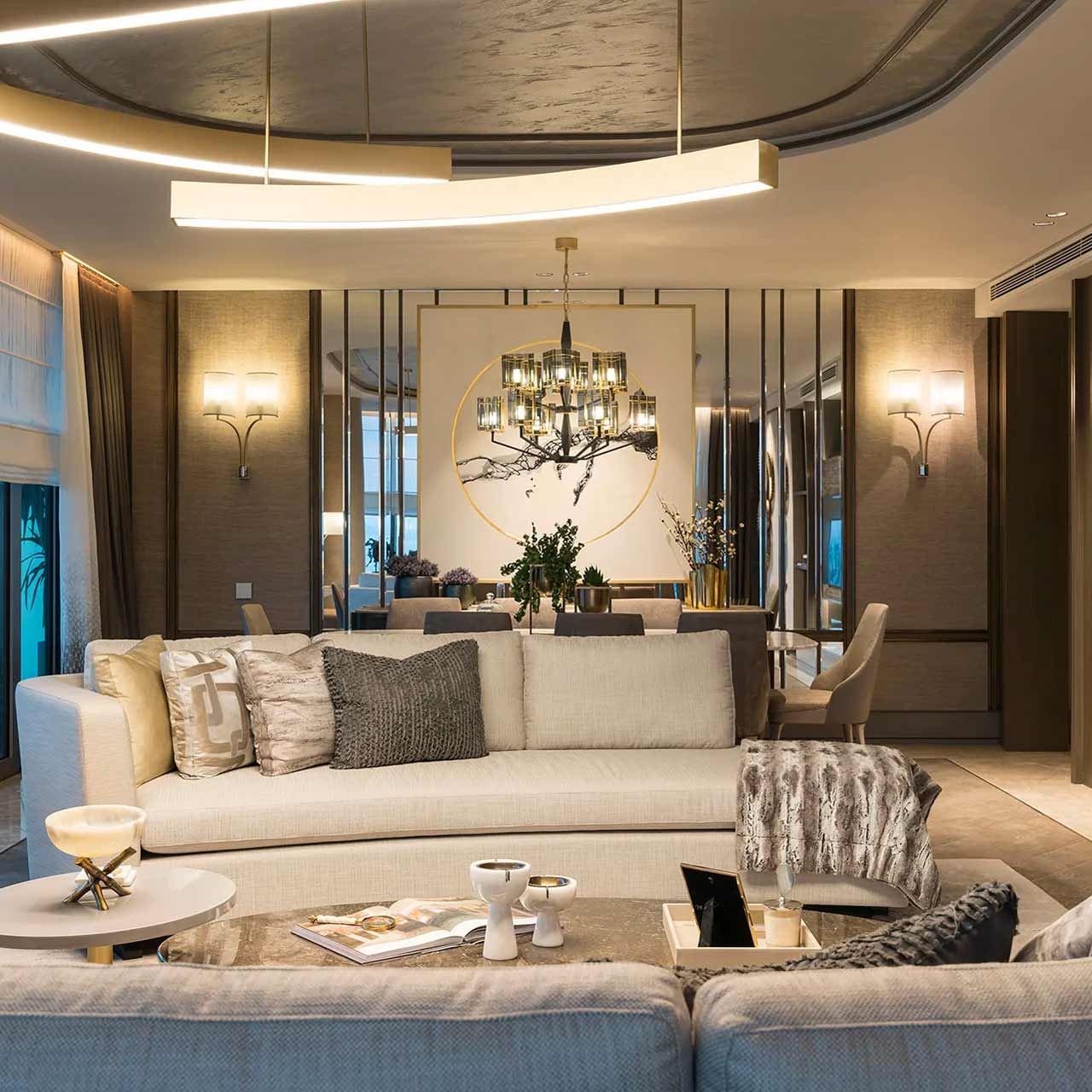
Yedi Mavi Interior 07 Int
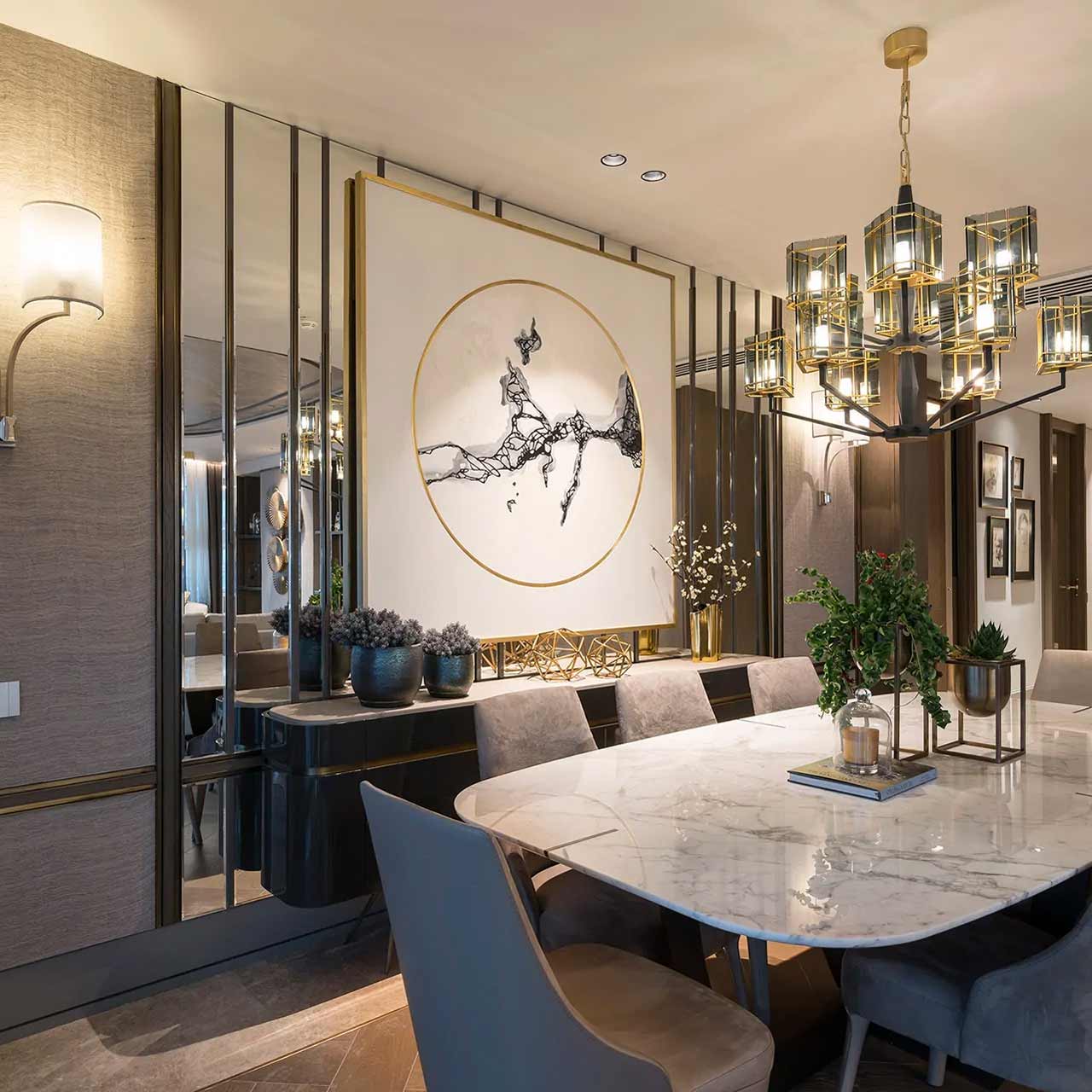
Yedi Mavi Interior 08 Int
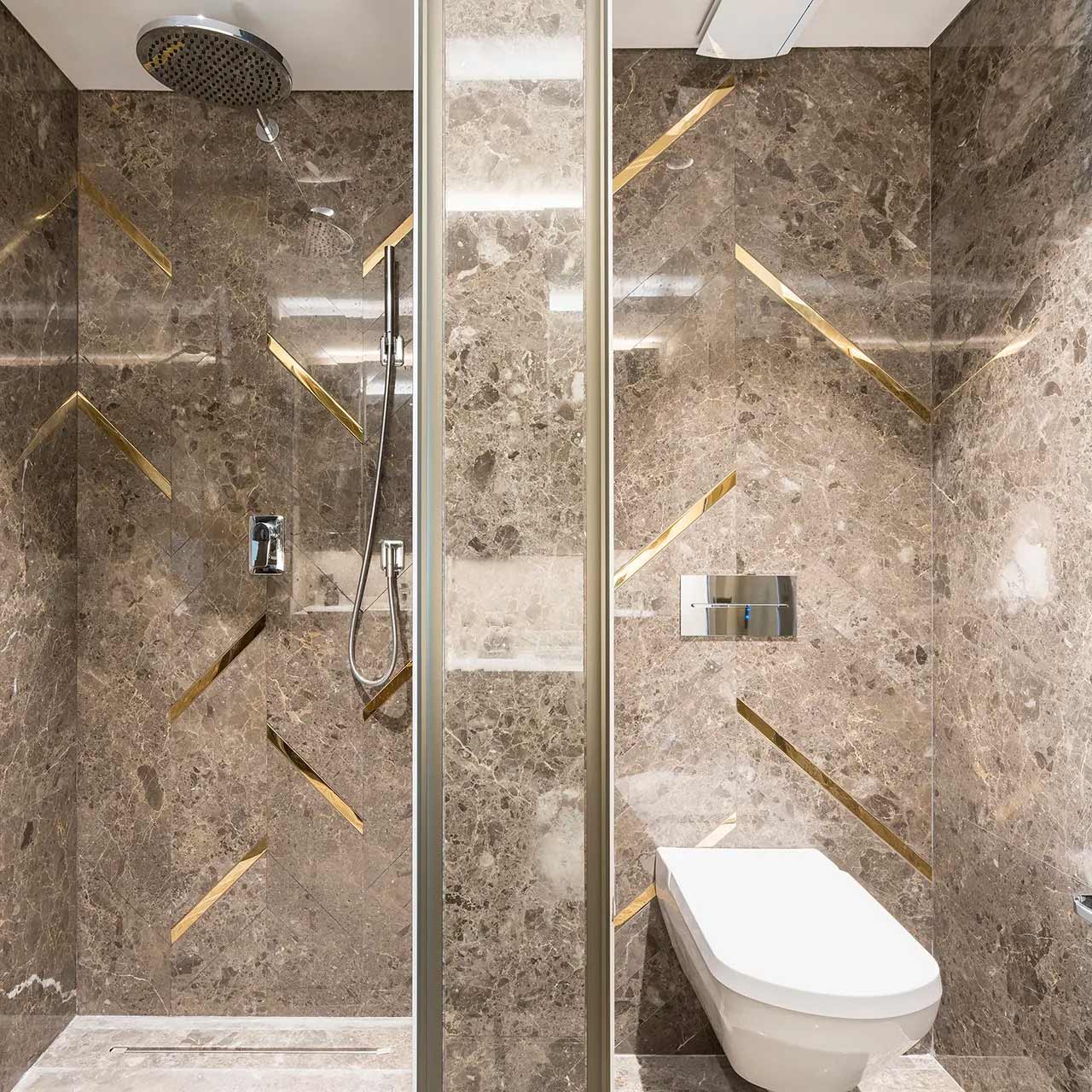
Yedi Mavi Interior 09 Int
Phase 2: Medium-Term Stabilization (Years 3 – 5) — The High-Margin Cash Engine
By Year 3, the asset becomes fully integrated into global luxury distribution networks (such as Tier-1 lifestyle brands under Marriott, Hilton, or Accor), capturing diverse, high-spending demand from North America, the GCC, China, and wider East Asia.
The Average Daily Rate (ADR) stabilizes conservatively at $300 – $350 USD. While Western hospitality operators struggle with margin compression due to skyrocketing labor and energy costs—capping Western EBITDA margins at 28% to 32%—this asset utilizes its natural structural currency hedge to push EBITDA margins to an astonishing 42% to 45%. Stabilized occupancy of 72% to 75% drives gross annual revenues up to $46 Million, yielding a 3-year total operational EBITDA of $57.2 Million.
Phase 3: Long-Term Horizon & Institutional Exit (Years 6 – 7) — Capitalization Maximization
Sovereign and institutional real estate funds operate on structured horizons rather than infinite holds. The terminal goal is the execution of a highly polished corporate exit to a secondary institutional buyer (e.g., Blackstone, BlackRock, or major sovereign wealth funds from the GCC).
The scarcity value of premium Istanbul coastlines generates a baseline organic real estate valuation increase of 4% to 5% annually in USD terms. By Year 7, producing a pristine, unencumbered annual net cash flow of over $22.8 Million, the asset is ideally prepared for exit packaging at an institutional 8% Capitalization Rate (Cap Rate), yielding a terminal asset sale price of $290 Million.
Investment Horizon & Simulation Matrix (USD)
The following financial simulation tracks the 7-year cumulative lifecycle of the $150 Million initial CAPEX allocation:
| Investment Horizon | Timeline | Avg. Occupancy | Annual Gross Revenue | Annual Net Cash Flow (EBITDA) | Cumulative Operational Inflows |
| Short-Term (Ramp-Up) | Years 1 – 2 | 52% – 65% | $26.0M – $34.5M | $7.8M – $13.1M | $20.9 Million |
| Medium-Term (Stabilized) | Years 3 – 5 | 72% – 75% | $41.0M – $46.0M | $17.2M – $20.7M |
$57.2 Million
(Running Total: $78.1M) |
| Long-Term (Peak Performance) | Years 6 – 7 | 76% | $48.5M – $51.0M | $21.8M – $22.9M |
$44.7 Million
(Running Total: $122.8M) |
| Terminal Capital Exit | End of Year 7 | — | — | — |
$290.0 Million
(Asset Liquidation Value) |
Ultimate Fund Return Metrics: ROI & IRR
At the terminal exit point at the conclusion of Year 7, the total capital returned to the investing fund is mathematically formalized as the sum of cumulative operational cash flows and the final asset disposition value:
-
Sermaye Çarpanı / Multiple on Invested Capital (MoIC): The initial equity allocation of $150 Million returns a total cash yield of $412.8 Million, representing a highly lucrative 2.75x MoIC in pure USD terms.
-
İç Verim Oranı / Internal Rate of Return (IRR): The project yields an annualized IRR of 19% to 21%. When contrasted with core European or North American luxury real estate placements which remain tightly bound between 6% and 8% IRR, this provides an undeniable risk-adjusted yield premium for institutional portfolio managers.
-
Payback Horizon: Driven by early-stage tax mitigations and superior high-margin cash conversion rates, the asset completely amortizes its entire initial capital outlay within a tight 6.1-year window.
Institutional Reference Links
-
NATO Ankara Summit 2026 Mandate: NATO Official Press Release
-
UNDP Global Goals Action Recognition: UNDP Turkey Press Release
-
National Zero Waste Portal: Republic of Turkey Zero Waste Official
-
Global Zero Waste Development Forum Report: Yeni Şafak International English
-
Macroeconomic Structural Dynamics Analysis: BBC Türkçe Feature
-
Sovereign Investment Reform Initiatives: Anadolu Agency Finance Brief
-
Investment Office of the Presidency of the Republic of Turkey: Invest in Turkey Gateway
#GlobalFinance #HospitalityInvestment #TurkeyInvestment #LuxuryRealEstate #ForeignDirectInvestment #ESG #ZeroWaste #NATOSummit2026 #AssetManagement #PrivateEquity #MacroInvesting #EBITDAAlpha
Download Report PDF ( Turkey 30Trillion Investment Report.pdf )