Technical Color Evaluation: Milas Lilac Marble
Technical Color Evaluation: Milas Lilac Marble
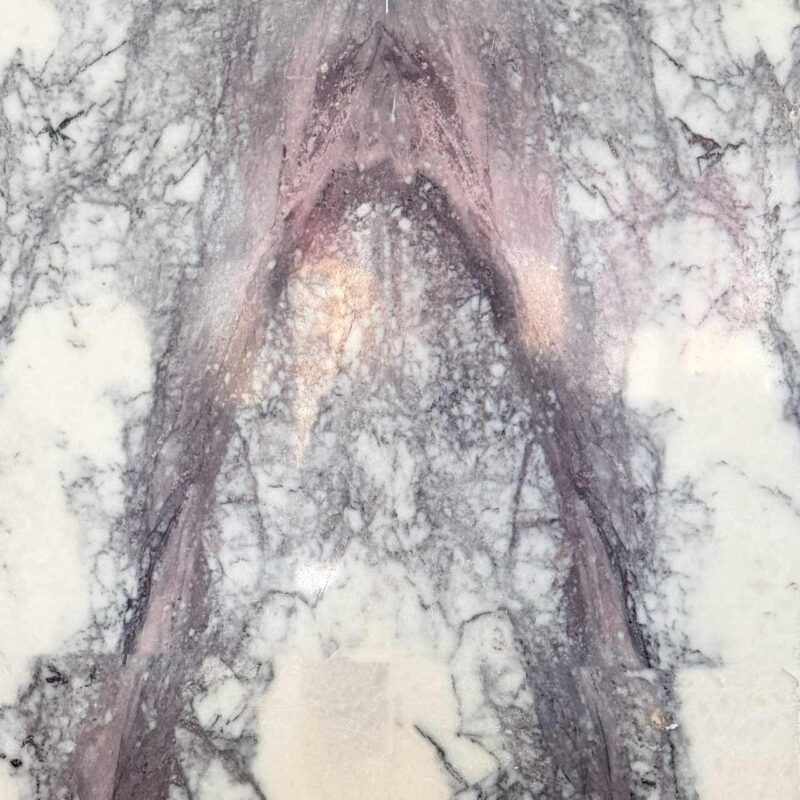
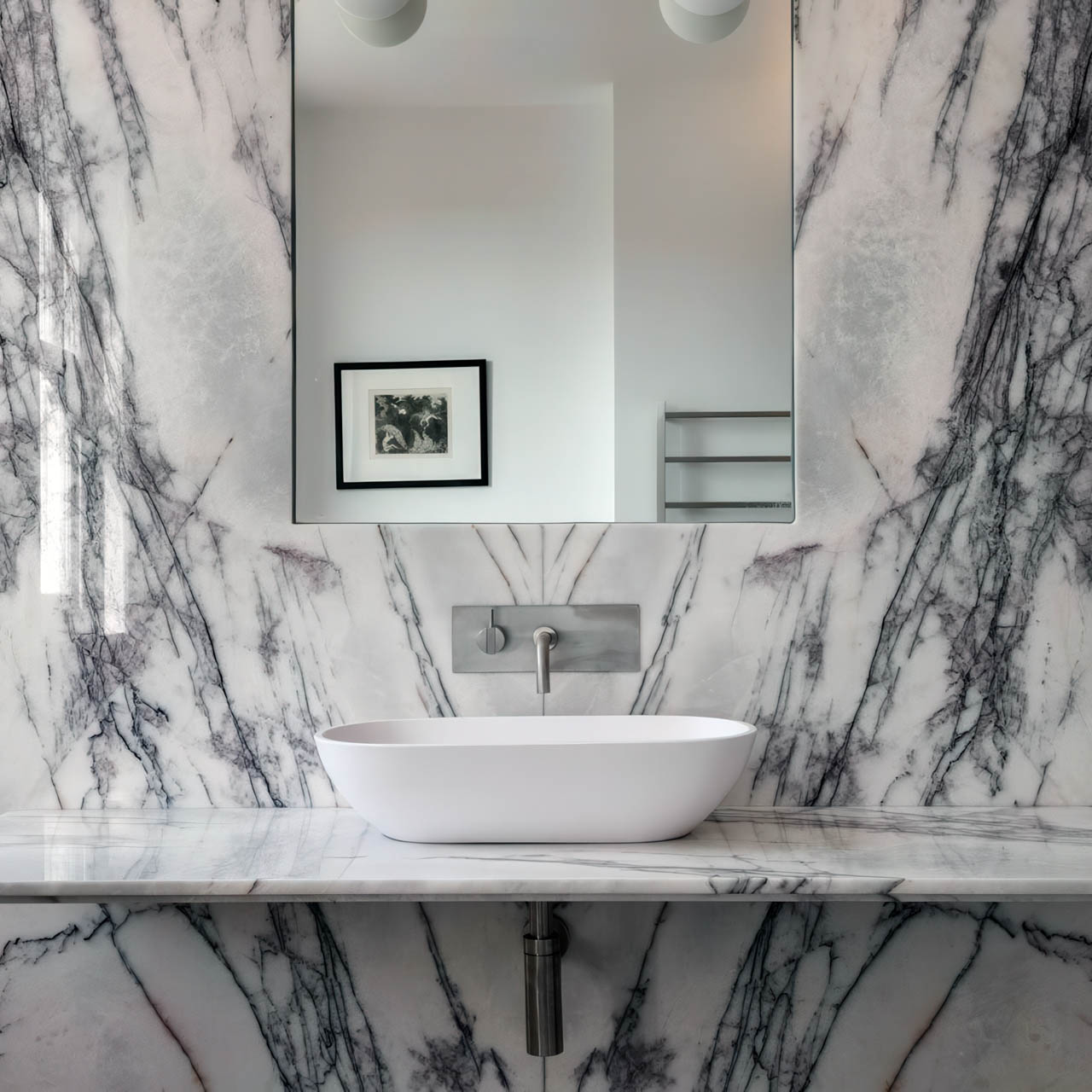
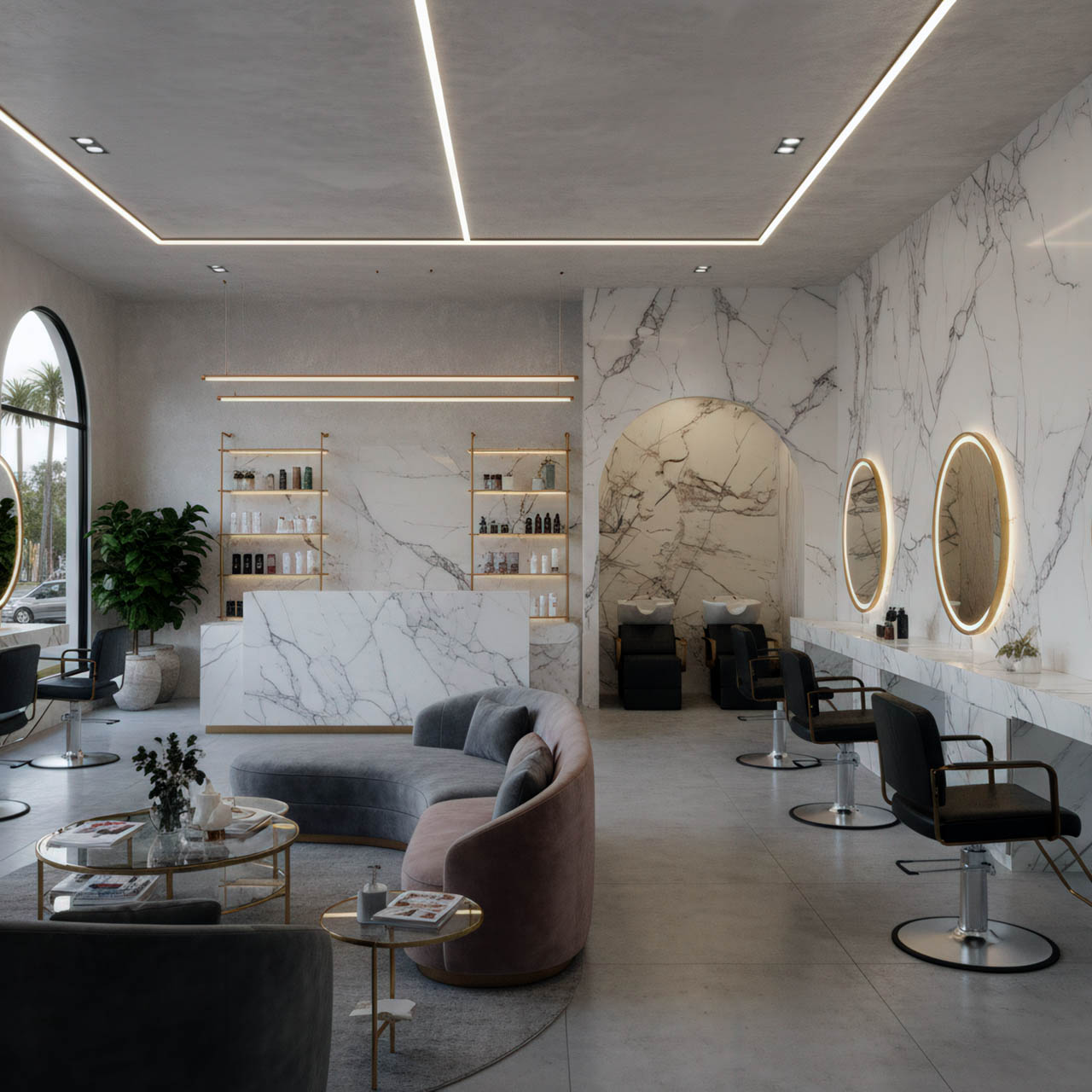
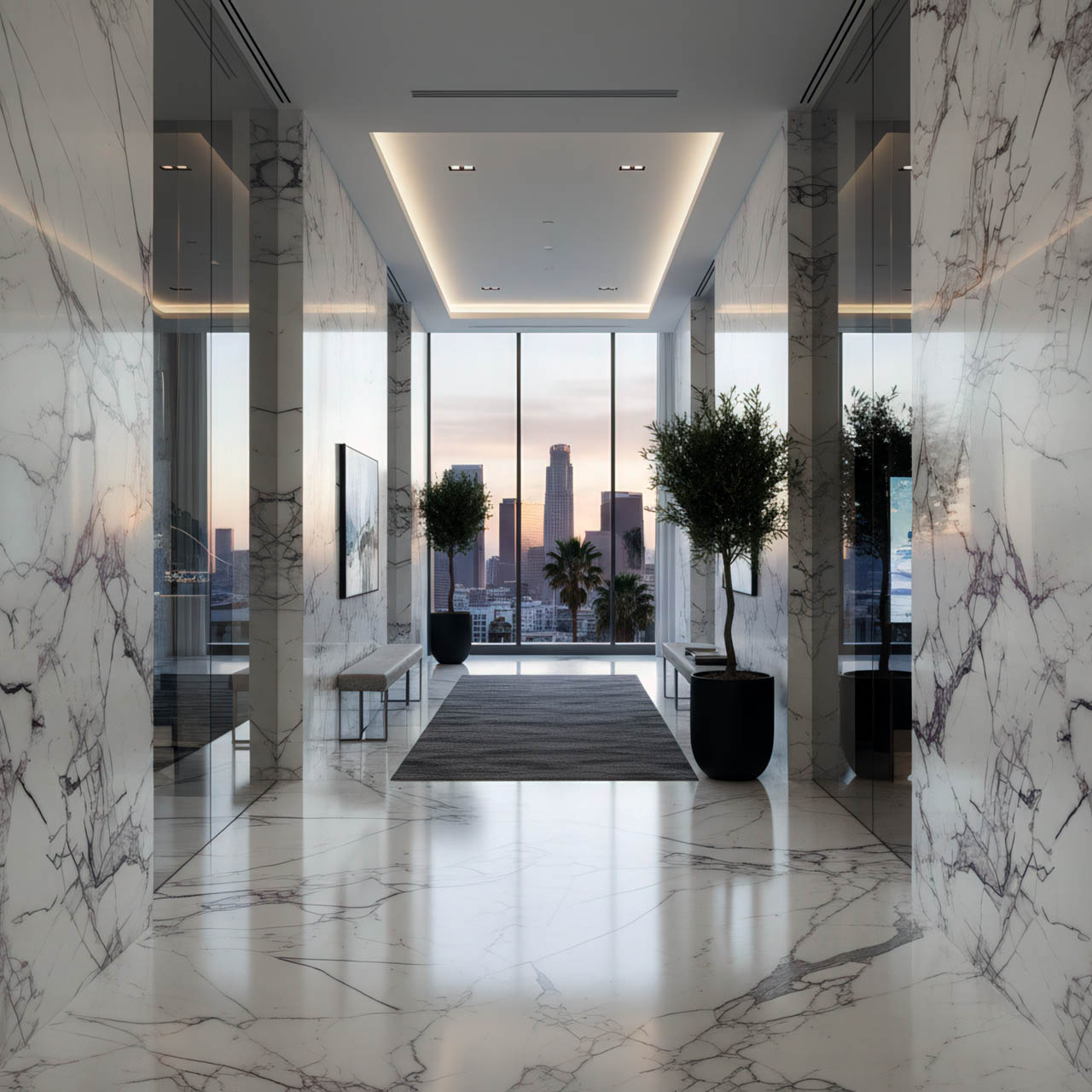
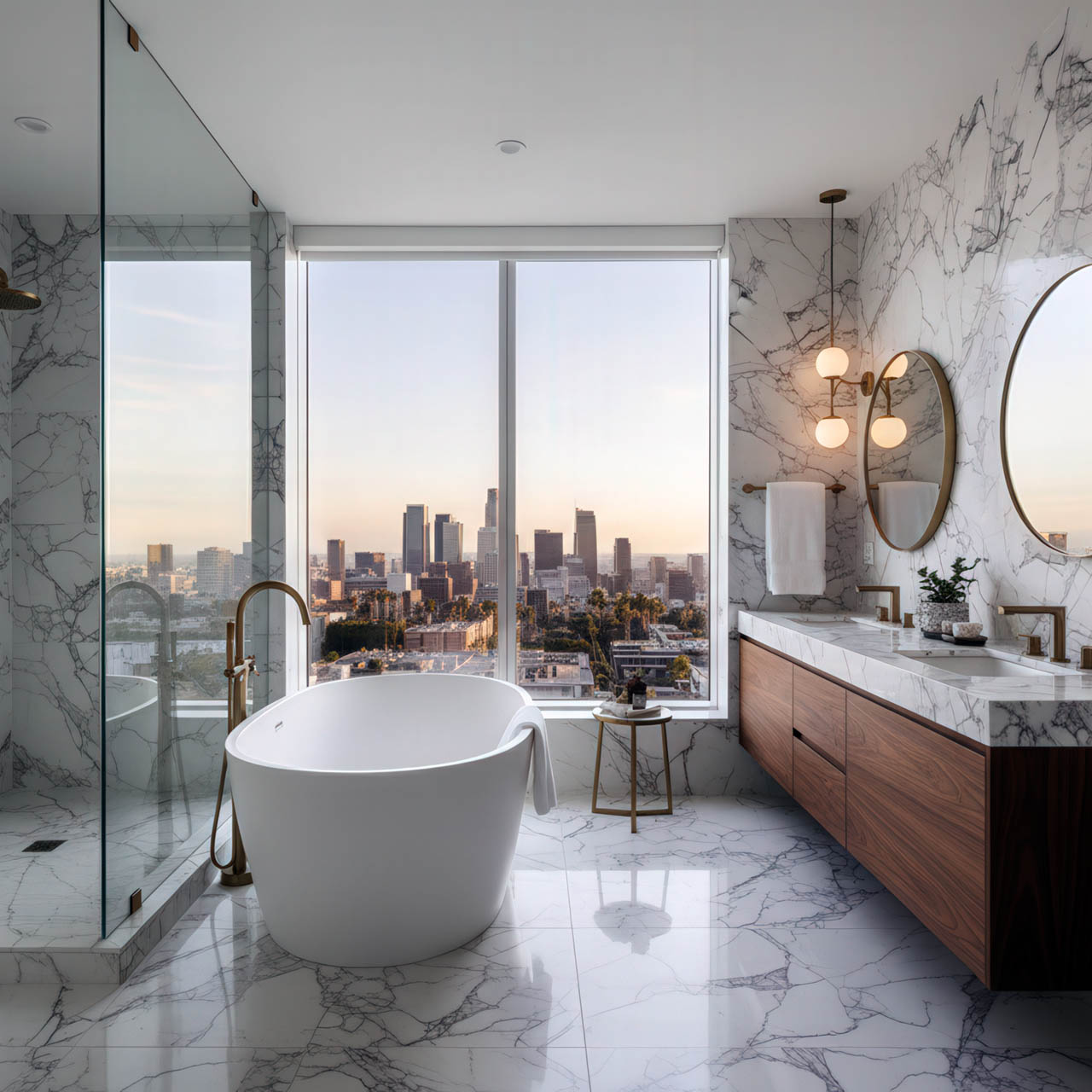
The provided image showcases a high-definition slab of Milas Lilac, a premium dolomitic marble characterized by its stark white crystalline base and intricate, “spider-web” vein structure. The following report breaks down the chromatic composition and spatial distribution of its primary and secondary tones.
Chromatic Distribution Analysis
The visual surface area is dominated by high-reflectivity neutrals, with the distinctive lilac and deep-violet veins providing the characteristic aesthetic contrast.
| Color Descriptor | Hex Code | Estimated Surface Area (%) | Role in Composition |
| Pristine White | #F7F7F7 | 72% | Primary Ground (Matrix) |
| Muted Lilac / Lavender | #B1A2AD | 18% | Secondary Veining (Soft edges) |
| Deep Aubergine / Charcoal | #3D343B | 8% | Primary Structural Veining (Sharp lines) |
| Occasional Ochre / Iron Stain | #A88E6B | 2% | Trace mineral inclusions |
Technical Color Characteristics
-
Primary Base (Matrix)
The base is a cool-toned, high-luminance white. Technically, this acts as the “negative space” of the slab, allowing the darker mineral concentrations to pop. In architectural lighting, this white reflects a significant amount of ambient light, often appearing slightly brighter under 4000K–5000K (Cool White) LED sources.
-
Vein Morphology & Pigmentation
The veining follows a “brecciated” or dendritic pattern.
- The Sharp Veins: These contain the highest concentration of manganese and iron oxides, resulting in the darker, almost blackish-purple hues (#3D343B).
- The Halo Effect: Surrounding the sharp veins are “bleeds” of lighter lilac (#B1A2AD). This transition creates the sought-after depth in Milas Lilac, giving it a three-dimensional appearance when polished.
-
Trace Anomalies
Small clusters of warm-toned pixels (#A88E6B) are visible in the upper-central quadrant. These are typical limonitic (iron) oxidations that occur naturally in the Milas region quarries. While minimal (approx. 2%), they add a natural warmth that prevents the slab from feeling overly sterile or clinical.
Conclusion for Specification
From a technical design perspective, this slab presents a high-contrast ratio. It is best suited for large-scale applications (book-matching on feature walls or expansive flooring) where the lilac “webbing” can be appreciated without being cut off by small-format dimensions.
While Muğla White provides the foundation and Milas Pearl offers the glow, Milas Lilac Marble (also known as Milas Laylak) is the “art piece” of the Turkish stone family. Characterized by its crisp white background and dramatic, deep purple and violet veining, this marble functions more like a natural canvas than a simple building material.
In 2026, architectural palettes have shifted toward “Atmospheric Minimalism,” where Milas Lilac is used as a hero material to inject organic color into otherwise monochrome spaces.
1. Bookmatched Statement Walls
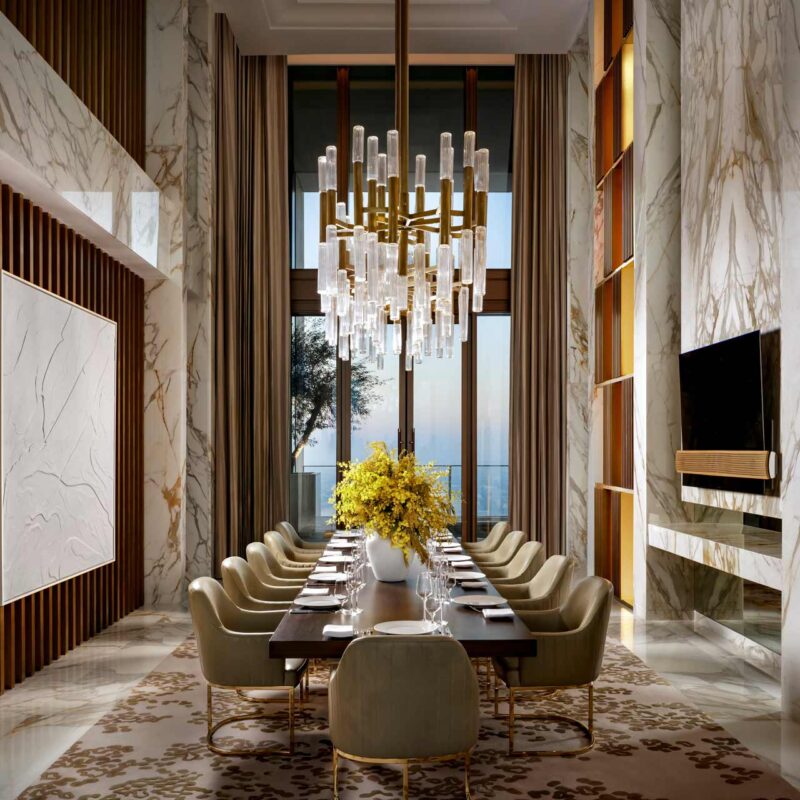
Milas Lilac is arguably the world’s most famous marble for bookmatching. Because its lilac veins are bold and linear, slab “A” and slab “B” can be mirrored to create a symmetrical, butterfly-wing effect.
-
Living Room Anchors: Large-scale bookmatched panels are used as “stone wallpaper” behind fireplaces or media units.
-
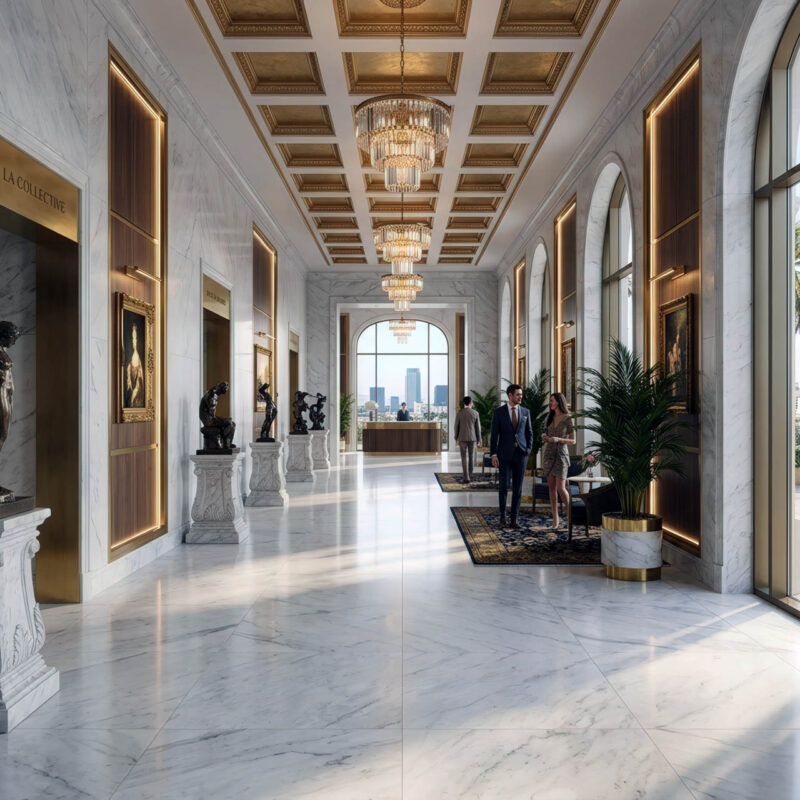
Corporate Identity: In boutique office lobbies, these patterns provide a sense of luxury and stability, often serving as the primary decorative element in a minimalist hall.
2. High-Fashion Retail and “Social” Spaces
The 2026 trend of “Instagrammable Architecture” has made Milas Lilac a favorite for high-end retail and cafes.
-
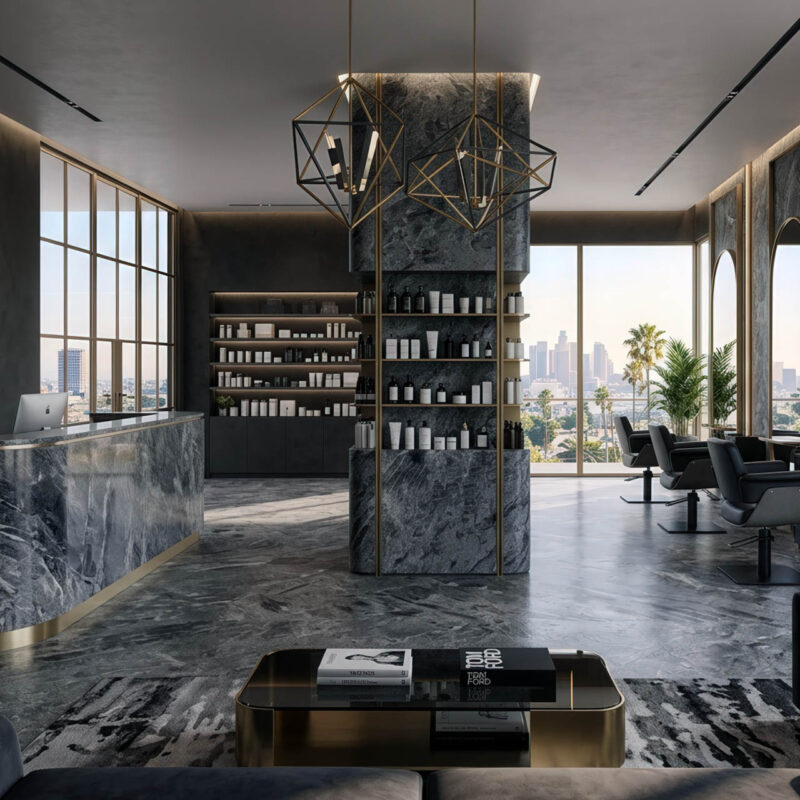
Countertops and Service Bars: The stone’s ability to hide minor wear through its busy, violet patterns makes it practical for coffee shop counters or boutique checkout desks.
-
Floor “Runways”: In luxury fashion stores, long slabs of Milas Lilac are laid in a “continuous vein” pattern to guide customer movement through the space, creating a sense of flow and direction.
3. The “Modern Hammam” and Spa Environments
Building on the tradition of Turkish marble, Milas Lilac is the premier choice for contemporary spa designs that want to break away from traditional beige or grey.
-
Wet Room Cladding: Its high compressive strength (nearly 100 MPa) and low water absorption (0.1%) make it ideal for high-moisture zones.
-
Heated Benches: The marble’s thermal conductivity allows it to be used effectively with underfloor and wall heating systems in modern steam rooms, where the purple veins appear deeper and more vibrant when wet.
4. Architectural Accents: Stairs and Portals
Milas Lilac is frequently used to define “transition zones” in a building.
-
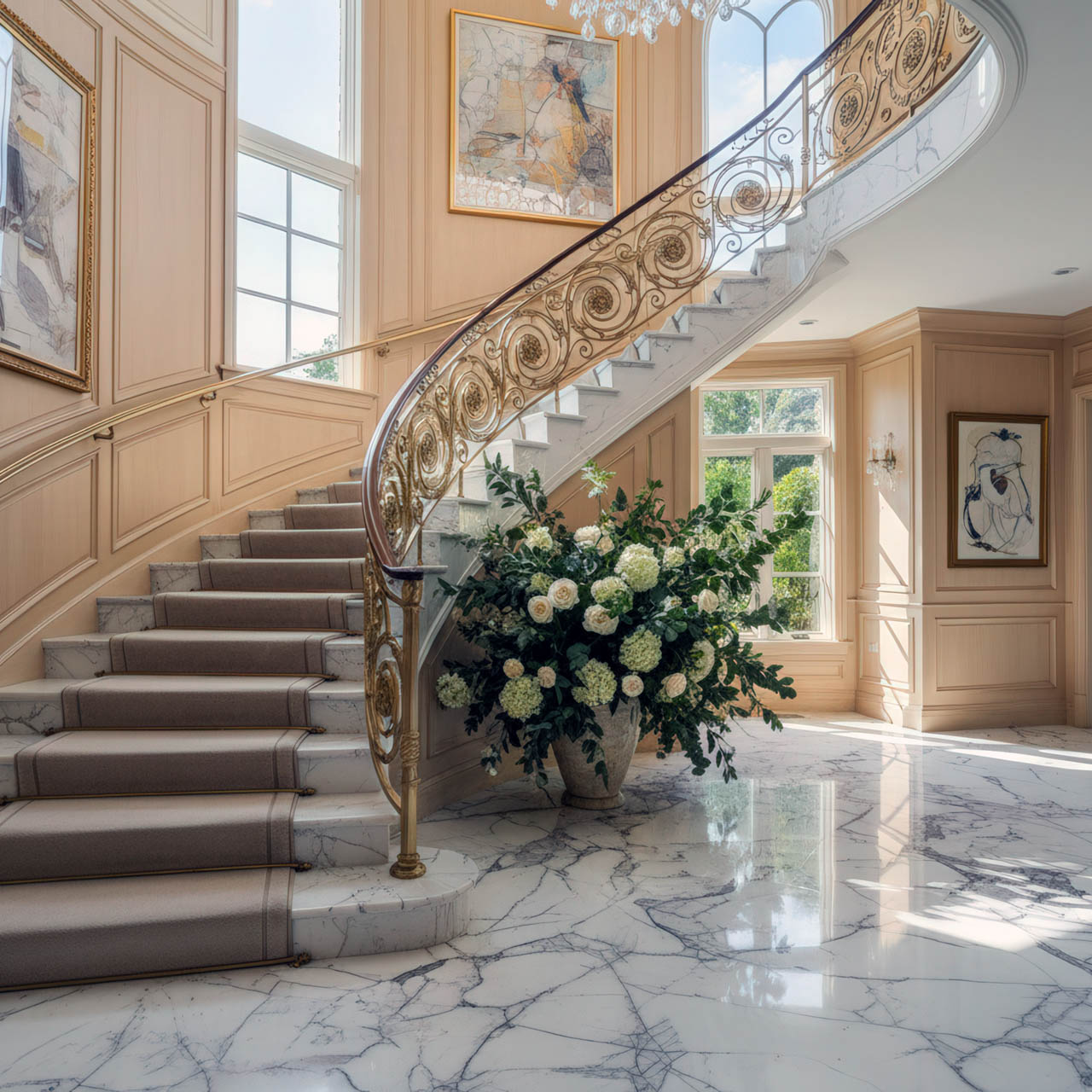
Floating Staircases: Its density (2730 kg/m3) allows for thin but strong treads. Architects often use Milas Lilac for the treads and a neutral stone like Muğla White for the risers to create a striking contrast.
-
Door Portals: In brutalist or minimalist homes, the door frames are often thickened and clad in Milas Lilac to create a “portal” effect, signaling a transition from public to private space.
Technical Specification Table
| Property | Value |
| Density | 2.73 g/cm3 |
| Compressive Strength | 99.96 MPa |
| Water Absorption (by weight) | 0.09% – 0.15% |
| Flexural Strength | 7-10 MPa |
2026 Design Palette Guide
Milas Lilac is highly reactive to its surroundings. Architects suggest these pairings for the current season:
-
With Metals: Pair with Brushed Brass or Champagne Gold. The warmth of the metal pulls out the violet tones in the marble.
-
With Woods: Pair with Dark Walnut or Charcoal Oak. The dark wood provides a heavy anchor for the marble’s airy white base.
-
With Lighting: Use 4000K (Neutral White) lighting. Warm yellow lights can make the purple veins look muddy, while cool blue lights can make the stone feel clinical.
Sustainability Note: As of 2026, Milas Lilac is highly prized for its “material honesty.” Because the patterns are so distinct, designers are moving away from small tiles and toward salvaged slab fragments for mosaic flooring, ensuring zero-waste in the fabrication process.