Technical Color Analysis Report Noche Travertine
Technical Color Analysis Report Noche Travertine
-
Primary Colorimetric Profile
The sample displays a “Noche” (Night/Dark) classification, which in the stone industry refers to a darker, earth-toned palette ranging from deep tan to walnut brown.
| Color Descriptor | Hex Code | CMYK Equivalent | Est. Area Coverage |
| Walnut / Deep Umber | #6B4F31 | 45, 60, 85, 40 | 45% |
| Toasted Almond / Ochre | #A6845B | 30, 45, 65, 10 | 35% |
| Pale Sand / Crema | #C8AD8D | 20, 30, 45, 0 | 15% |
| Crystalline Voids / Gray Inclusions | #8C8C82 | 40, 35, 45, 15 | 5% |
-
Texture and Distribution
The color distribution is characterized by a brecciated and porous morphology.
- Dominant Tones (45%): The dark walnut base forms the “matrix” or background of the slab. It provides the visual weight and defines the “Noche” grade.
- Secondary Tones (35%): The toasted almond highlights are found in the more compact, calcified regions. These areas show a higher density of calcium carbonate.
- Highlight Tones (15%): These appear as lighter flecks or “clouds,” often surrounding the naturally occurring pores (vacuoles) or filled pits.
- Inclusions (5%): Minor grayish or translucent spots indicate mineral variations, likely quartz or secondary calcite deposits that haven’t absorbed the same iron oxide staining as the rest of the slab.
-
Visual Characteristics for Architectural Application
- Saturation: Medium-High. The earthy pigments are rich, providing a warm, organic feel.
- Uniformity: Low. Like all travertines, the color is highly variegated. This “movement” is desirable for large-scale cladding to avoid a monolithic or artificial appearance.
- Finish Impact: In the current “honed” or “natural” state, the colors are muted. A polished finish would darken the #6B4F31 tones significantly and increase the contrast with the lighter #C8AD8D highlights.
Technical Note: Travertine is porous by nature. For high-traffic or moisture-prone areas, the color perception will change based on whether the pores are “filled” (with color-matched resin) or “unfilled” (natural state).
The Timeless Appeal of Noche Travertine in Architectural Design
Noche Travertine, sometimes referred to as “Noce” (Italian for walnut), is a celebrated natural stone known for its deep, earthy chocolate and coffee tones. While it is geologically a sedimentary rock rather than a true metamorphic marble, it is frequently categorized alongside marbles in the stone industry due to its high density and ability to be polished.
Quarried extensively in Turkey and Italy, Noche Travertine is characterized by its signature “pocked” surface—small cavities formed by trapped gas bubbles during its creation in hot springs—which provides a rustic, old-world charm that few other materials can replicate.
1. Exterior Facades and Cladding
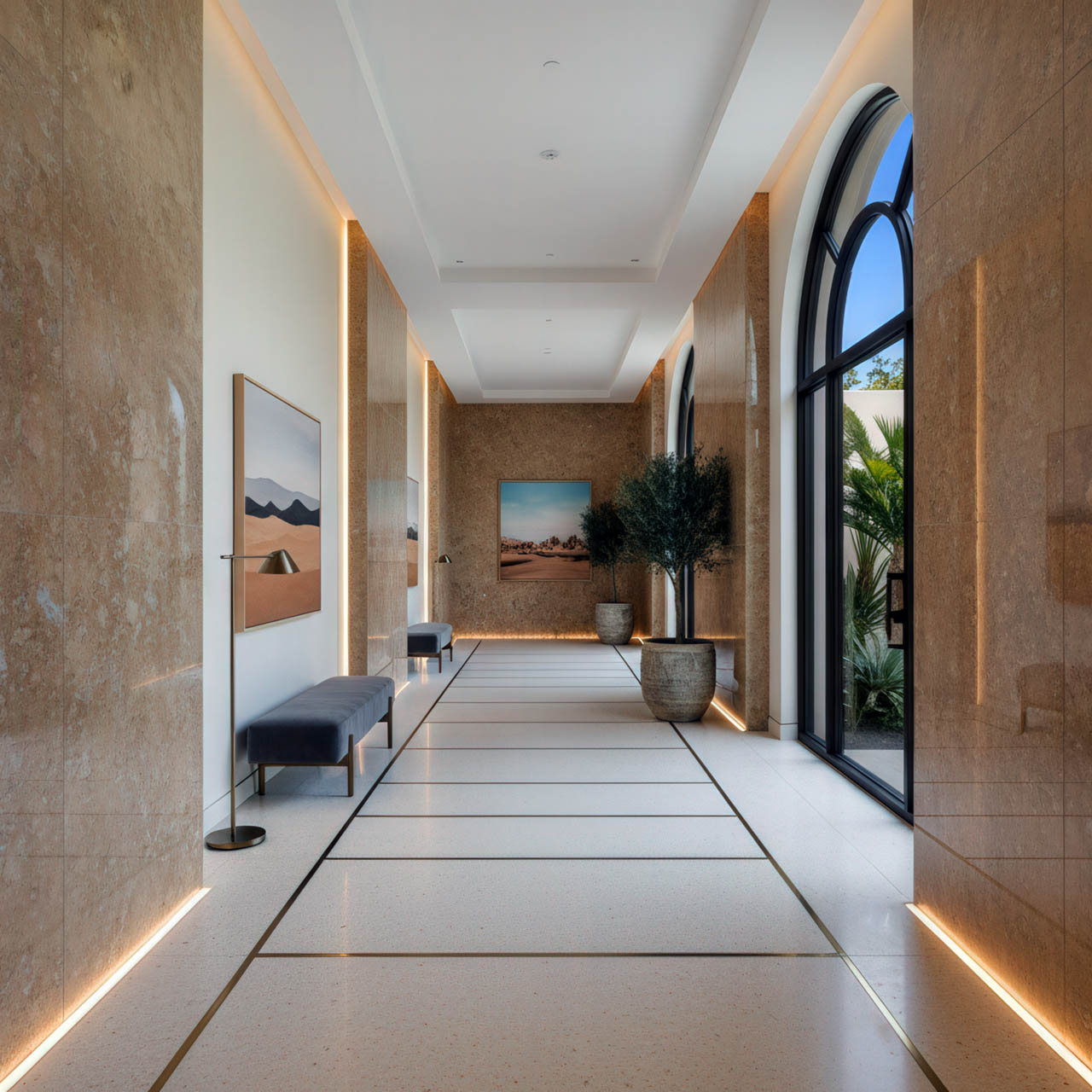
Noche Travertine is a premier choice for exterior wall cladding, especially in Mediterranean and contemporary desert architecture. Its thermal properties make it an excellent insulator.
-
Vented Facades: Because it is lighter than many granites, it is often used in “rainscreen” or vented facade systems on large commercial buildings.
-
Natural Weathering: Unlike many darker marbles that might fade under intense UV exposure, Noche Travertine maintains its rich brown hues and develops a beautiful patina over time.
2. Pool Decks and Outdoor Living
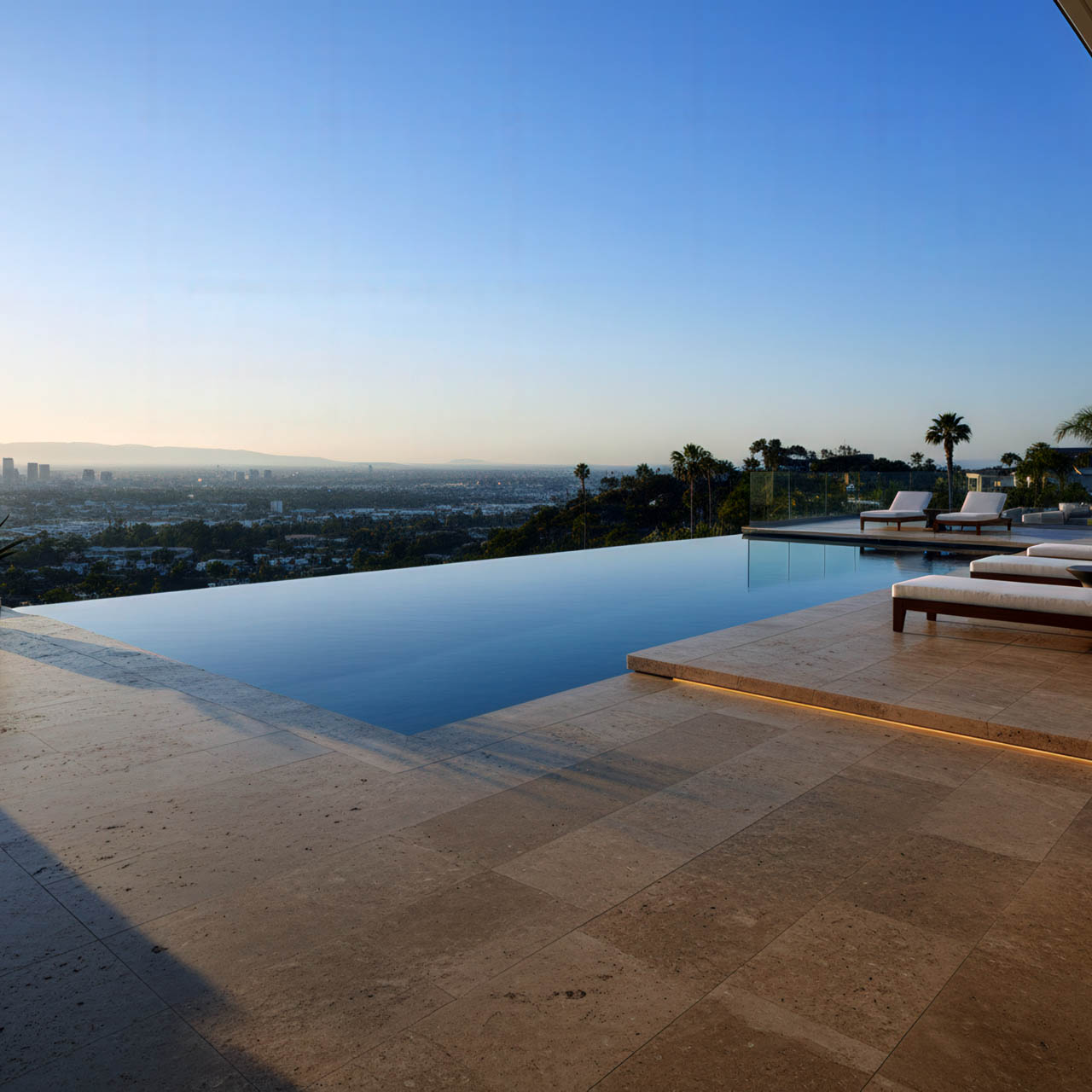
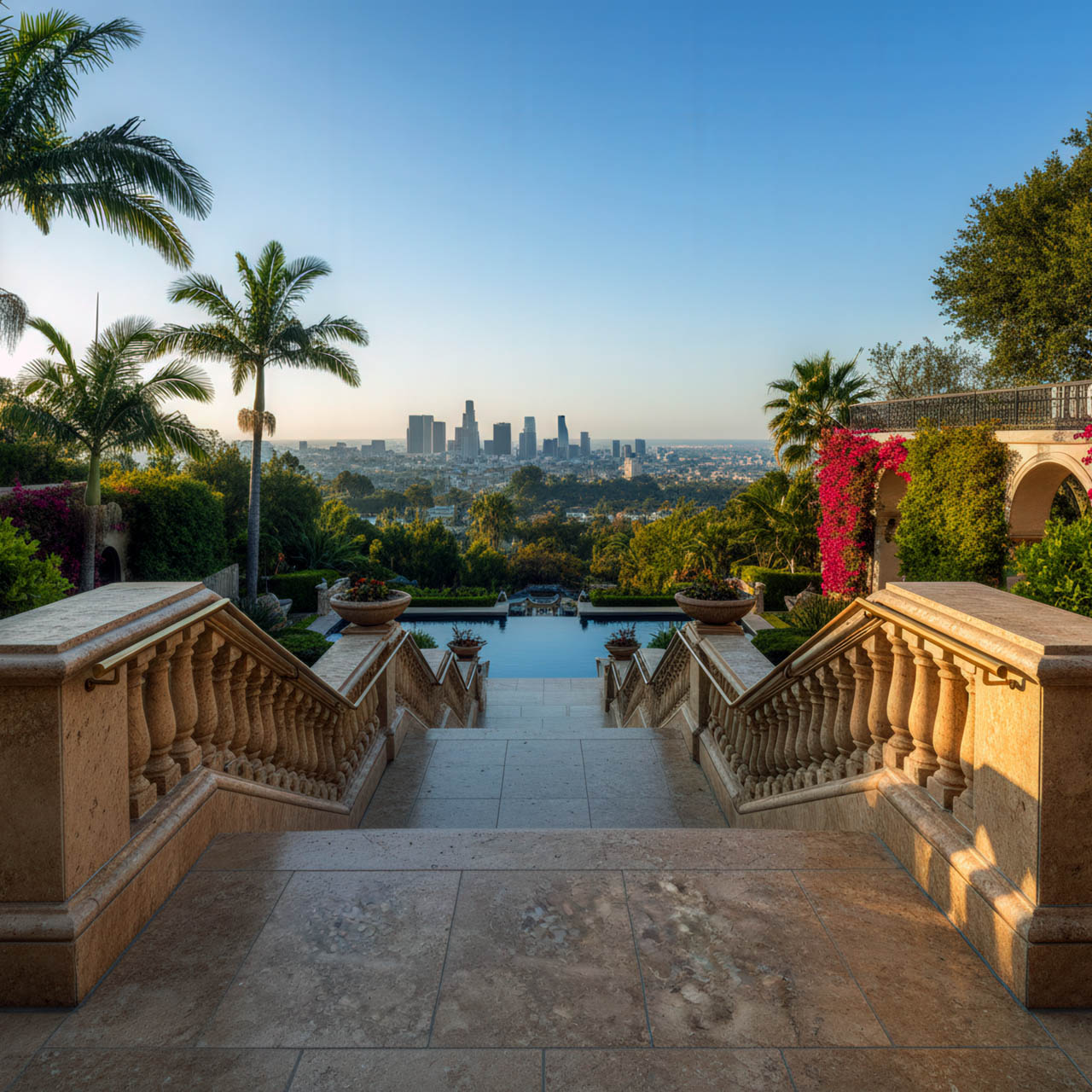
Perhaps the most “classic” application for Noche Travertine is in landscaping and poolside design. It is prized here for both its aesthetics and its physical safety properties.
-
Heat Resistance: Even in direct sunlight, travertine remains cool to the touch, making it ideal for bare feet on pool decks.
-
Slip Resistance: When left in a tumbled or honed finish, the natural pores of the stone provide excellent grip, even when wet.
-
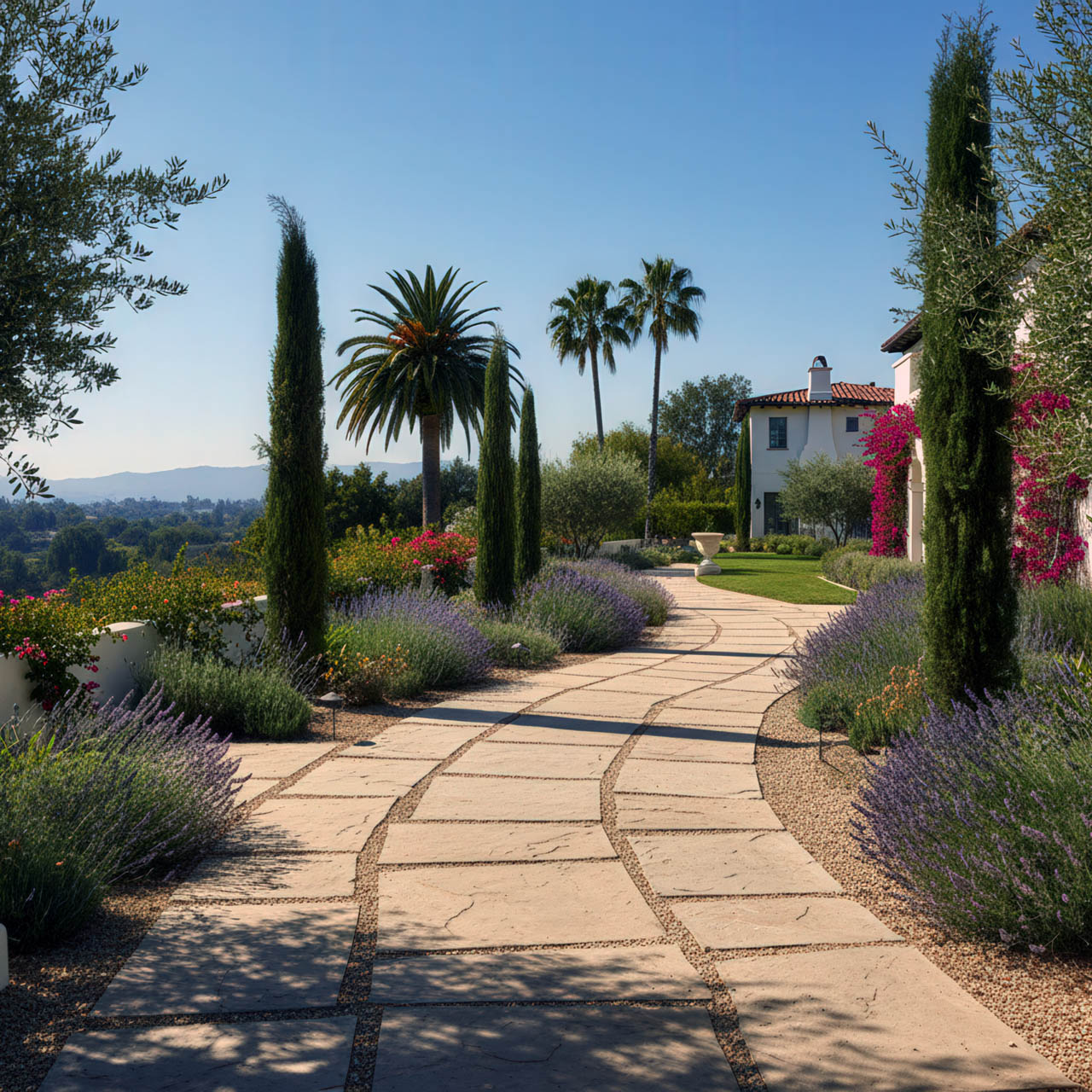
French Pattern Layouts: Architects often specify Noche in a “Versailles” or French pattern (a mix of four different sizes) to create a timeless, staggered look for patios.
3. Interior Flooring and “Warm” Minimalism
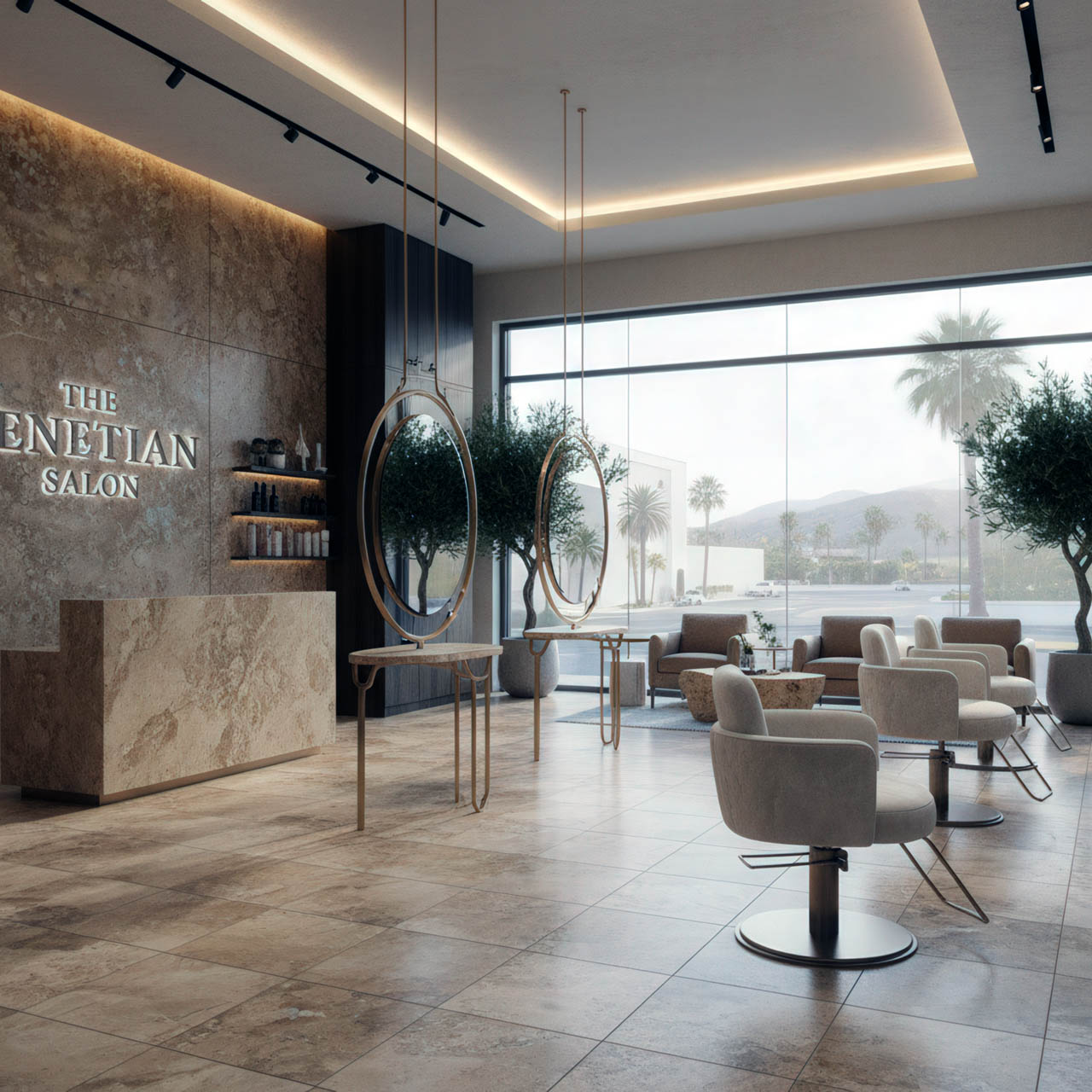
In interior design, Noche Travertine is the antidote to the “cold” feeling of white or gray stone. It brings an immediate sense of warmth and history to a space.
-
Filled vs. Unfilled: For interior floors, the stone’s natural pores are usually “filled” with a matching resin to create a smooth surface that is easy to clean.
-
Residential Great Rooms: The walnut tones pair exceptionally well with timber beams and plaster walls, making it a staple in “Modern Mediterranean” or “Rustic Luxury” homes.
4. Feature Walls and Fireplace Surrounds
The texture of Noche Travertine makes it a favorite for vertical surfaces where touch and shadow play a role.
-
Split-Face Accents: By using “split-face” Noche (where the stone is rough-cut to show its internal texture), architects create rugged, three-dimensional feature walls in living rooms or corporate lobbies.
-
Fireplace Facades: Its high resistance to heat makes it a natural fit for floor-to-ceiling fireplace surrounds, where it provides a cozy, grounded aesthetic.
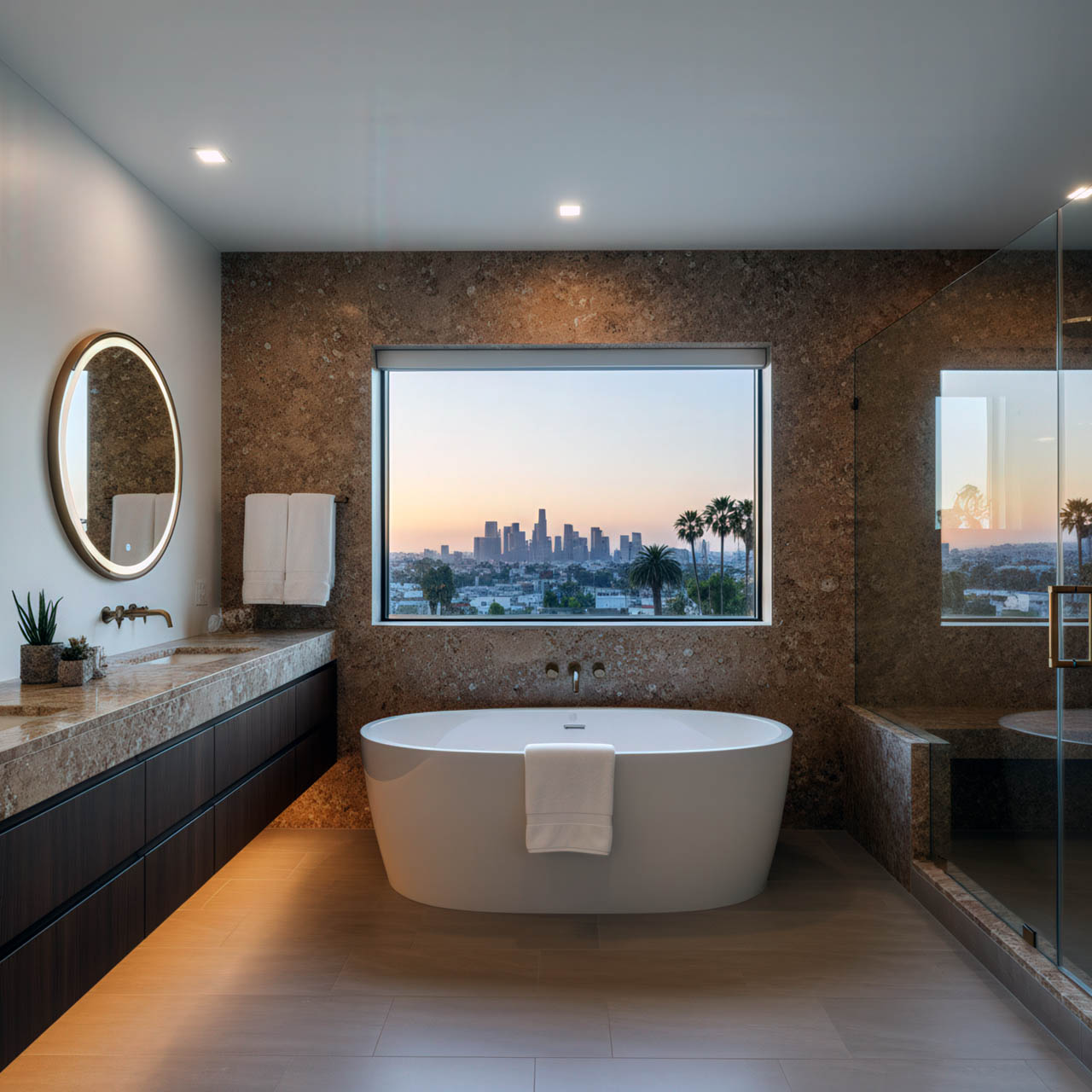
5. Master Suite Bathrooms
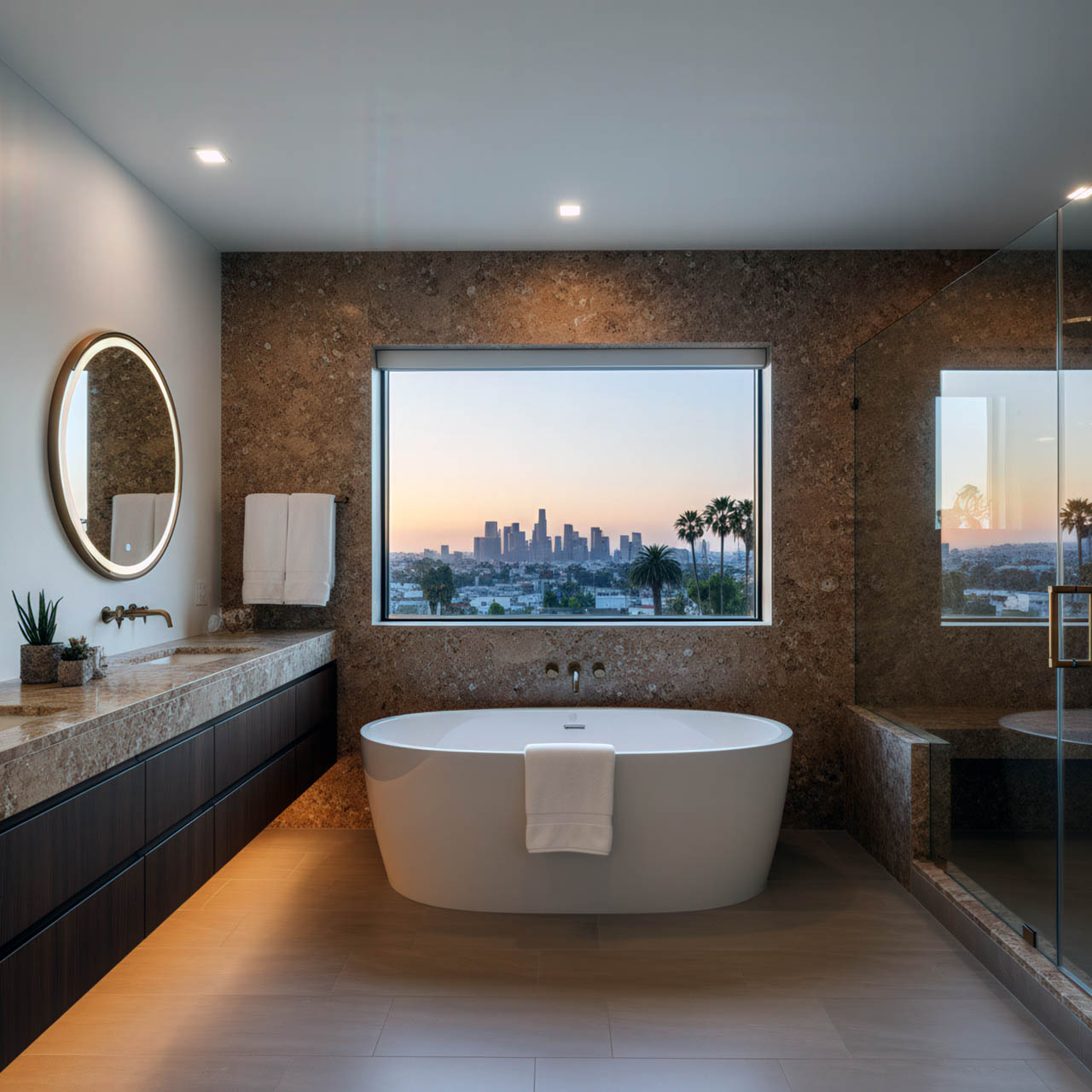
Noche Travertine is frequently used to create “cave-like” or spa-like sanctuaries.
-
Full-Height Wall Panels: Using large slabs of Noche in a shower creates a seamless, monolithic look.
-
Vanity Tops: While it is a porous stone that requires sealing, its dark color hides water spots better than light travertine, making it a practical choice for high-end master baths.
Technical Specifications for Planning
| Property | Value/Characteristic | Design Benefit |
| Mohs Hardness | 3 to 4 | Durable enough for residential floors; easy to carve for custom details. |
| Porosity | Moderate to High | Provides natural “grip” for outdoor areas; requires sealing for indoor use. |
| Density | 2450 kg/m3 | Offers significant thermal mass, helping regulate indoor temperatures. |
| Common Finishes | Tumbled, Honed, Brushed | Versatile textures ranging from “ancient” to “sleek.” |
Conclusion
Noche Travertine offers a depth of color and a tactile history that modern synthetic materials simply cannot mimic. Whether it is grounding an ultra-modern glass villa or adding authenticity to a rustic estate, its “walnut” palette ensures that the architecture feels connected to the earth.